ASSEMBLING WHAT MATTERS
Automate device assembly from the first clinical batch: semi-automatic modules, inline quality control and full traceability, built for micro batches.

4–5
parts per minute, semi-automatic
Micro
batches and clinical studies
UP TO
ISO 7
cleanroom-ready modules
100 %
traceability, no manual logs
Your batch is small.
Your risk is not.
Clinical batches are often assembled by hand. Manual assembly carries variability, contamination risk and gaps in the data, at the stage where every unit counts.
MANUAL ASSEMBLY
Variability
Every operator assembles a little differently.
MANUAL ASSEMBLY
Contamination
Every hand in the process is a risk to the product.
MANUAL ASSEMBLY
Paper logs
Manual records leave gaps in the batch data.
MANUAL ASSEMBLY
Scale-up
The manual process has to be rebuilt for the line.
From bulk parts to tray.
Checked inline.

FEEDING AND ASSEMBLY
Flexible feeding › Assembly › Inline inspection
Components are fed from bulk, assembled by the robots and checked inline, so every unit carries its quality data.
OPERATOR AND MODULE
Loading › Unloading
Semi-automatic means the operator loads and unloads, the module carries out the critical steps. That keeps the cell compact and the setup fast for micro batches.
Small batch?
Full documentation.

100 %
traceability, automated documentation.
Automated documentation replaces error-prone manual logs, so the data of every unit is audit-ready from the first batch.

Same platform
from clinical trials to market supply.
The processes you validate at lab scale run on standardized MicroFactory modules and transfer to a MicroFactory line with little effort.
IN ACTION · 0:40
Lab-scale assembly at work.
A semi-automatic lab-scale module assembling autoinjector components for a clinical batch.
SHOWN: LAB SCALE DEVICE ASSEMBLY · AUTOINJECTOR EXAMPLE
Start at lab scale.
Grow into a line.
Begin with semi-automatic modules for clinical batches and move the validated processes to a MicroFactory Assembly Line when your product goes to market.

LAB SCALE
4–5 ppm
PROCESS
Semi-automatic, operator loads and unloads
MADE FOR
Clinical trials, micro batches, product launches
QUALITY
Inline monitoring, 100 % traceability

ASSEMBLY LINE
15–30 ppm
PROCESS
Fully automated MicroFactory Assembly Line
MADE FOR
Market supply of syringes and autoinjectors
VALIDATION
Processes transferred from the pre-series
Device, components, batch sizes. We come back with a proposal within two working days.
Built on the MicroFactory Ecosystem.
One MicroFactory Core under every ESSERT module: standardized baseframe, interfaces, controller, safety and software. Semi-Automated Device Assembly runs on it, one module per process.
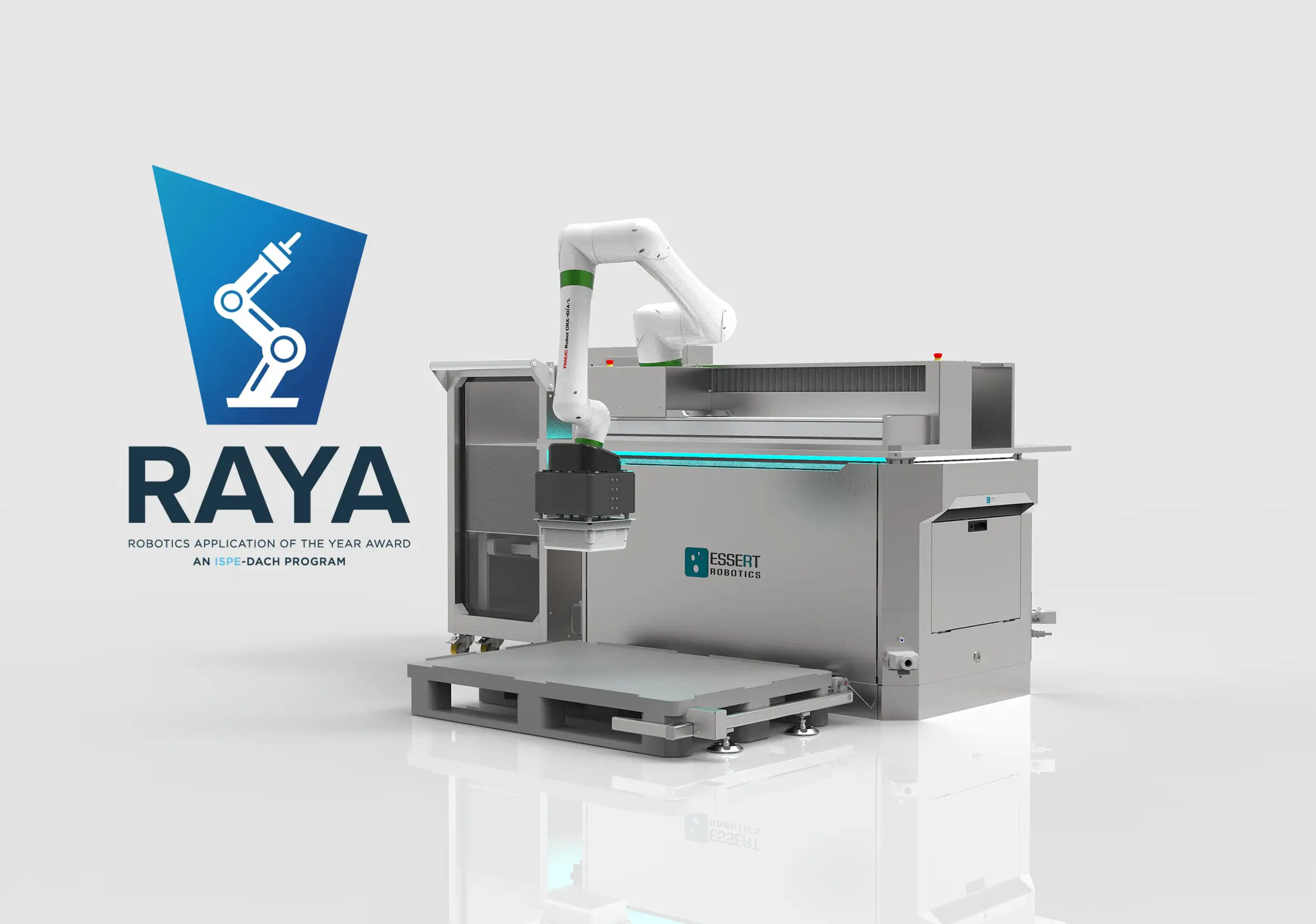
SINCE 2012 · 100+ MANUFACTURERS · ISPE ROBOTICS APPLICATION OF THE YEAR AWARD, 4 YEARS IN A ROW


FAQ
Questions
we get asked.
What comes up in first calls, answered short.
The long answers we bring to the meeting.
What does semi-automatic mean here?
The operator loads and unloads, the module carries out the critical assembly steps with inline monitoring. That keeps the cell compact and the setup fast for micro batches.
What output does the cell reach?
4 to 5 parts per minute on an existing cell. Exact figures depend on the device and are confirmed in the feasibility phase.
Which devices can it assemble?
Syringes or autoinjectors, in different device configurations.
Does it switch between device formats?
Yes. It switches between device formats with minimal changeover time.
How is quality documented?
Inline monitoring and automated documentation replace manual logs, with 100 % traceability for every unit.
Is it ready for GMP and the cleanroom?
Yes. It is designed for pharma requirements, with pre-qualified modules that maintain GMP compliance and minimize contamination risks.
How do we move from clinical trials to market supply?
The processes you validate at lab scale run on standardized MicroFactory modules and transfer to a MicroFactory line with little effort.
How much space does it need?
Little. The cell is built compact to save cleanroom space and operating costs.