HANDLING WHAT MATTERS
Material handling.
Automated.
Robotic modules for the loading, unloading and material flow around your filling, assembly, inspection and packaging machines. On lines running today and lines still on paper.

TODAY · TUBS PICKED FROM A GAYLORD BOX BY HAND
THE PROBLEM
The machines are automated. The handling around them is not.
Material handling is everything your product goes through between machines: tubs off the pallet, out of the box, into the filler; vials out, into inspection, into trays, into boxes, onto pallets. Most of it by hand.
Jobs nobody wants to staff
Lifting tubs, unpacking boxes, stacking trays: repetitive, physically demanding work at the stations that are hardest to staff, and every shift has to fill them again. In US private industry, overexertion and repetitive motion caused nearly one in three workplace injuries that led to days away from work or restricted duty.[1]
Every touch is a risk
In aseptic processing, each manual intervention is a contamination risk and one more entry to document. EU GMP Annex 1 asks you to keep them to a minimum.
Custom automation puts the validated line at risk
A one-off machine added to a validated line means a long project, new interfaces and a supplier only one team understands.

FOUR MOMENTS
Where we step in.
Whether your line is running or still on paper: your filling and inspection machines are the fixed points. We take over the handling before, between and after them.
01
BEFORE FILLING
Tubs arrive on pallets or in boxes.
Depalletizing, unboxing and feeding the filler, without a hand on the nest.
02
AFTER FILLING
Filled tubs and vials come off the line.
Unloading the filler and feeding inspection, in one flow.
03
AFTER INSPECTION
Tubs, trays and vials go into boxes, boxes onto pallets.
Packing and palletizing at the end of the line.
04
BETWEEN FORMATS
Syringes move from tub to rondo tray and back.
Format change without retooling the line, wherever it sits on yours.
Planning a new line? The handling belongs in the layout, not in the add-on list.
THE OPTIONS
Three ways to run the handling.
More people
The strain
stays with your team, shift after shift
The validated line
manual interventions stay in the process
When something changes
retrain, rehire
Custom-built automation
The strain
moves to one machine, for one format
The validated line
new interfaces on a validated line
When something changes
rebuild or re-engineer
IN PRACTICE
What changes on the floor.
“
Due to the high level of automation, one single RoboTub module can reduce the number of operators down to 1. The system has already paid for itself after 1 year.

Arno Schroff
Director Site and Plant Development, Vetter Pharma
SOLUTIONS
Solutions for material handling.

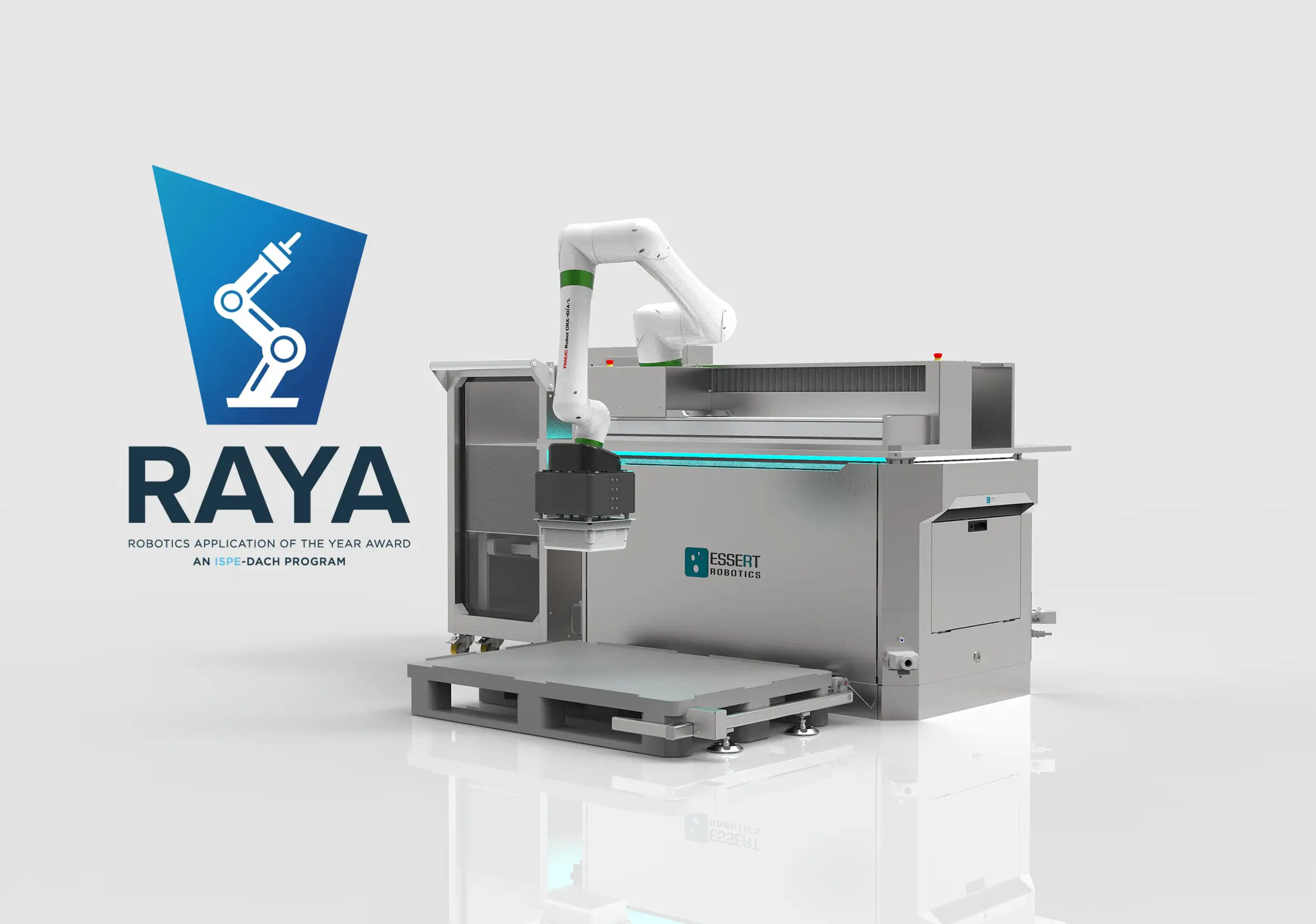
RoboTub
Loads and unloads tubs at your filling, assembly, inspection or packaging machine. One person starts it, then it runs on its own.
View solution

RoboTub SteriFill
Unboxes tubs and feeds them to your filling machine, built for sterile environments.
View solution
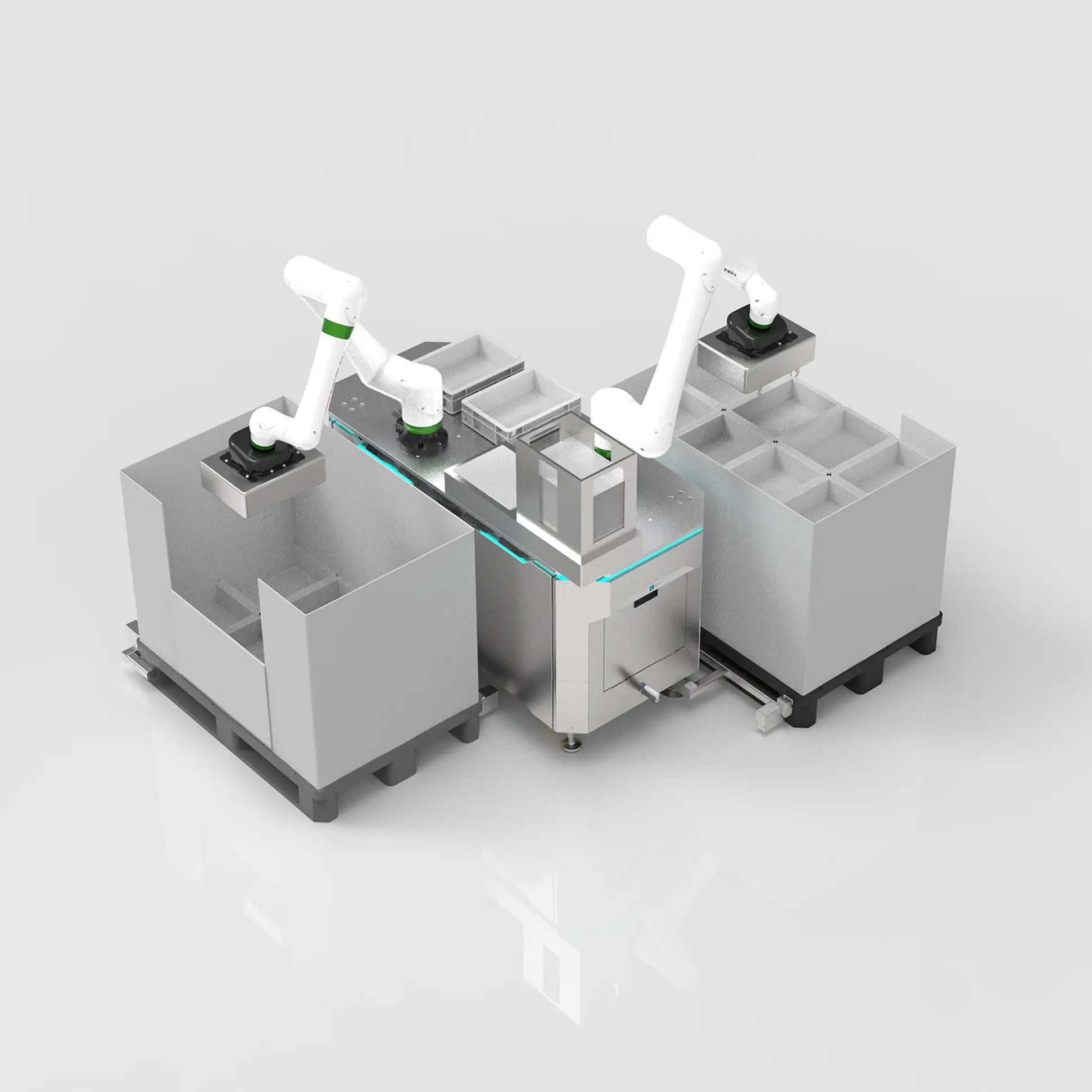
RoboVial
Unloads filling lines, serves inspection machines and packs vials from 2R to 30R.
View solution
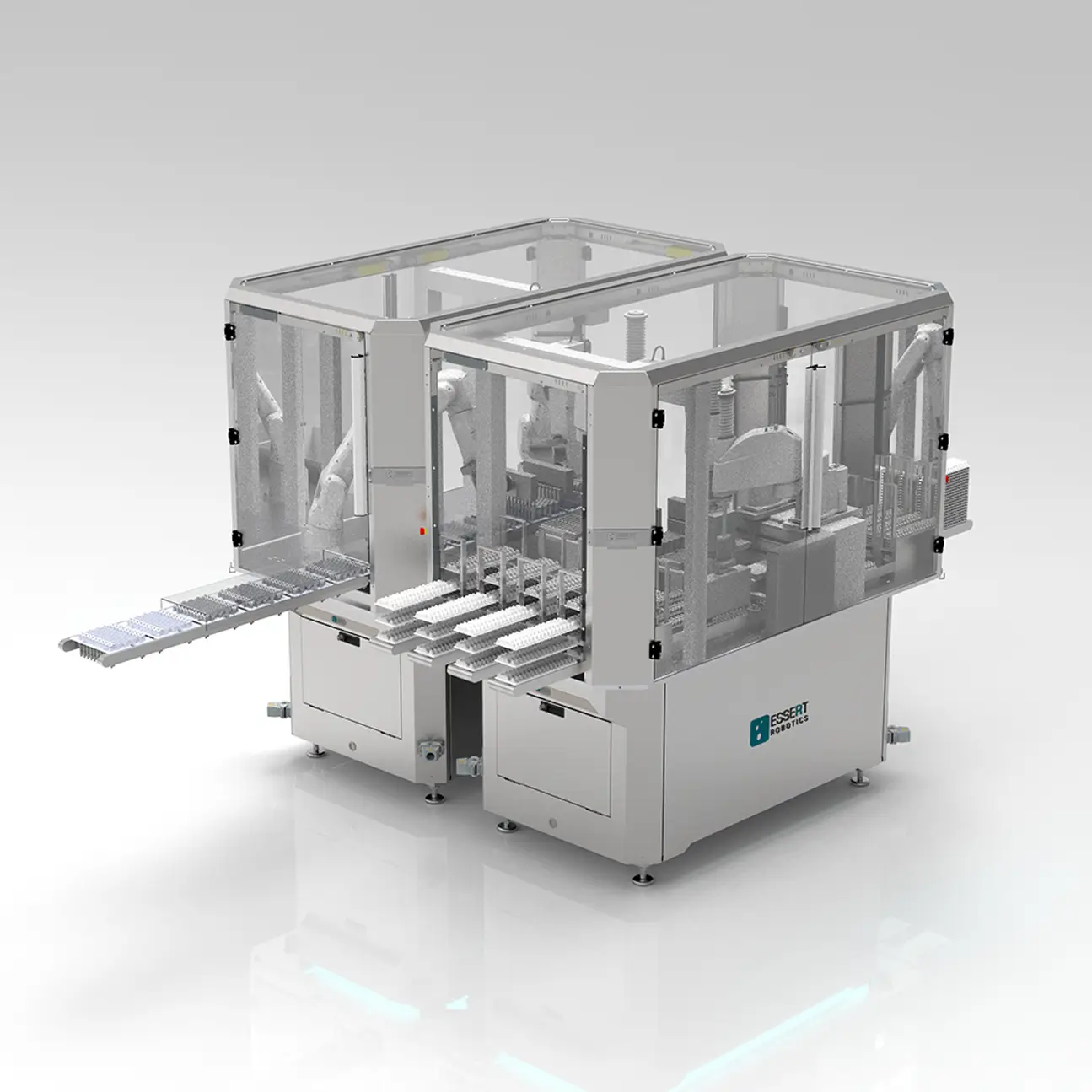
Retrayer
Moves syringes between tubs and rondo trays in both directions, with automatic pitch adjustment.
View solution

Speed Bin Picking
Picks transparent and glass parts from bulk with 3D vision. Taught in without coding.
View solution

Mobile Robotics
Material flow between stations: pallets, containers, line supply.
View solution
FAQ
Questions from everyone at the table.
Will it run through the shift?
One person starts RoboTub, then it runs autonomously. Your people move from lifting and unpacking to work that needs them.
Can I integrate it without putting the line at risk?
Each module has its own controller and defined interfaces. Power, data and logic connect when it docks. Modules are tested at our commissioning station before they ship, so less happens on your floor.
What does this do to my validation status?
Each module is qualified on its own. Fewer manual interventions mean fewer contamination risks to control. Our PQ Support & Validation program delivers audit-ready data.
What if this is the wrong call?
You start with one module and grow from there. Technical availability is contractually guaranteed, with service teams in Bruchsal, Germany and Morrisville, North Carolina.
We're planning a new line. When should the handling come in?
Before the layout is frozen. We work from your URS and line concept, so the handling, pallet formats and interfaces are part of the plan instead of an add-on. The first step is an assessment.
Do your modules work with the filling and inspection machines we already run?
Yes. We don't build filling or inspection machines. Our modules take over the loading, unloading and material flow around them, so your equipment and its validated process stay in place.
Which formats can you handle?
Tubs, vials from 2R to 30R, rondo trays, boxes, Gaylord boxes and pallets in European and US formats. RoboTub SteriFill handles 2″ to 5″ tubs from Ompi, BD, Schott and Nipro. Speed Bin Picking singulates bulk parts, including transparent components.
Can the modules work in sterile environments?
Yes. RoboTub SteriFill is built for tub unboxing and handling in sterile environments, where every manual intervention counts.
Do you handle tub depalletizing and nest and tub handling?
Yes. RoboTub depalletizes tubs from EU and US pallets and Gaylord boxes, feeds them to your filling machine and takes them off again after filling, nests included. RoboTub SteriFill adds unboxing in the sterile zone. The Retrayer moves syringes between tub and rondo tray.
