Humanoid Robots in Pharma Manufacturing: What Is Hype, What Is Real
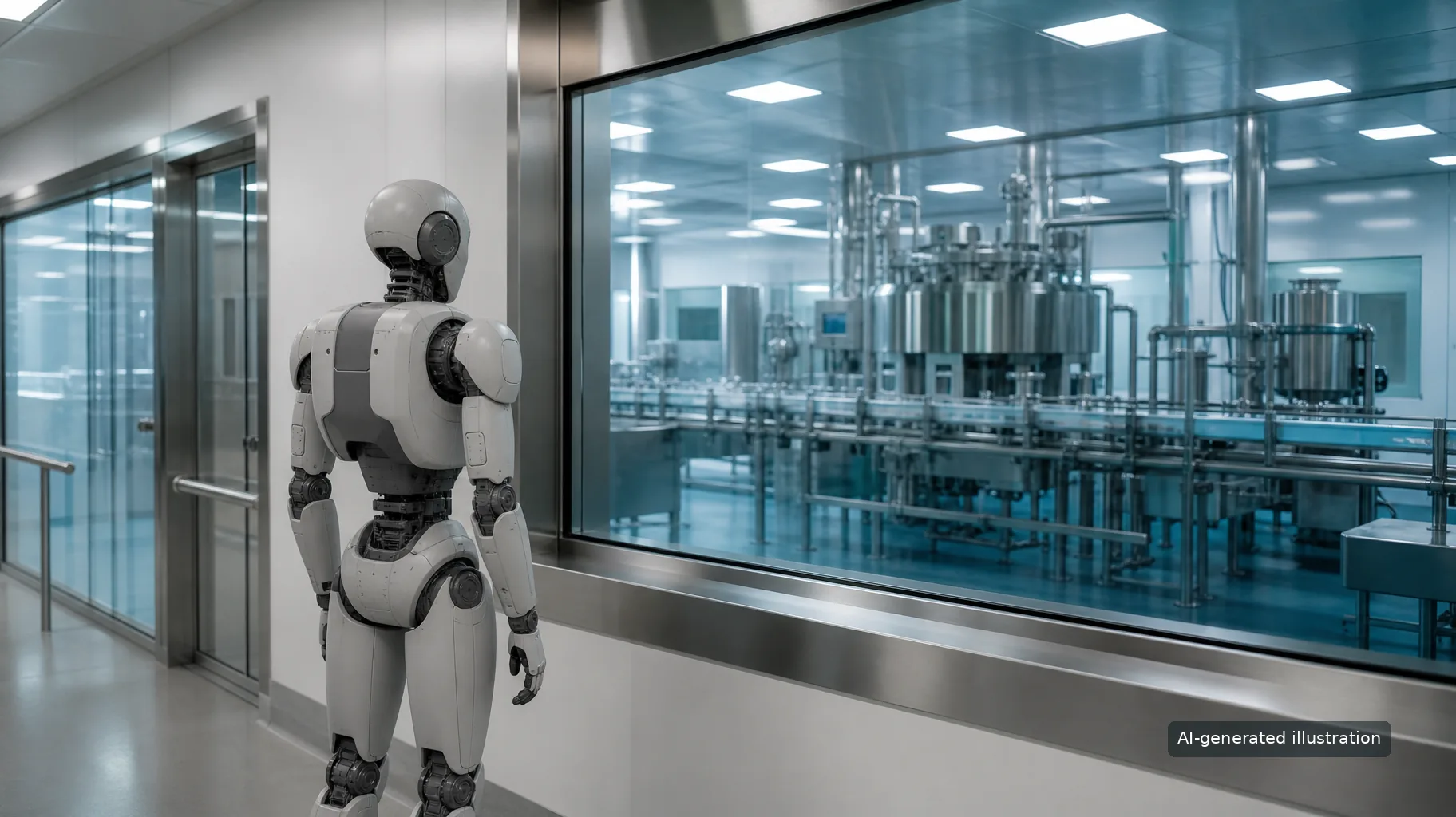
AI-generated illustration. No humanoid robot works in a qualified pharma cleanroom today, which is rather the point of this article.

Ayhan Akyüz
•
Articles
Humanoid Robots in Pharma Manufacturing: What Is Hype, What Is Real
AI-generated illustration. No humanoid robot works in a qualified pharma cleanroom today, which is rather the point of this article.
Ayhan Akyüz
•
Articles
Humanoid Robots in Pharma Manufacturing: What Is Hype, What Is Real
AI-generated illustration. No humanoid robot works in a qualified pharma cleanroom today, which is rather the point of this article.
Ayhan Akyüz
•
Articles
Pharma manufacturers keep asking us the same question this year: "Can we already use humanoid robots in our production?"
It is a fair question. The videos are spectacular, the funding rounds are enormous, and the promise sounds like everything a production leader wants to hear: a machine that works like a person, learns like a person, and slots into any line without engineering effort.
We build robotic automation for pharmaceutical production every day. We qualify systems for GMP environments, we carry the warranty when a line does not run, and we have watched every robotics wave of the past two decades from the factory floor. So here is our honest assessment of where humanoid robots stand for pharma production in 2026: what genuinely impresses us, what does not hold up to scrutiny yet, and what would need to change.
The progress is real
Let us start with credit where it is due, because the engineering achievements are remarkable.
Today's leading humanoid platforms are no longer classically programmed. They are trained through teleoperation and imitation learning: human operators demonstrate tasks hundreds of hours at a time, and vision-language-action models learn control policies from that data. Some of these models now run entirely on the robot's onboard GPUs, and vendors report multi-hour autonomous shifts in logistics pilots [1].
Anyone who dismisses this as a gimmick has not looked closely. The development curve is steep, and we take it seriously.
And yet, when we assess these systems against what pharmaceutical production actually requires, a different picture emerges. Pharma is a special environment, with rules that do not bend.
There is no safety standard for humanoid robots yet
Every robot we install works under an established body of safety standards. For humanoid robots, that body of standards does not exist yet. The dedicated standard under development, ISO 25785-1, has reached committee draft stage [2]. Ratification timelines are still debated in the industry [3]; based on our own conversations around the standardization work, we do not expect certified platforms before late 2027.
Until then, no humanoid system is a "safe system" in the normative sense. Every single application would need its own case-by-case safety assessment. And humanoids on legs add a hazard class that existing robot standards never had to address: a robot that balances can fall. A robot on wheels, or one bolted to a frame, cannot.
This is not a permanent argument against the technology. Standards will come. But a pharma manufacturer planning a line today cannot qualify equipment against a standard that does not exist.
"Self-learning" collides with qualification
This is the point we consider most fundamental, and it gets far too little attention in the public debate.
Pharmaceutical production runs on qualified equipment. A qualified system must behave tomorrow exactly as it was validated to behave today. That principle is codified in the industry's guidance for computerized systems, GAMP 5 [4], and the ISPE's 2025 guide on artificial intelligence spells out how hard adaptive, non-deterministic systems are to validate under it [5].
Now consider what humanoid vendors present as their core feature: systems that learn and adapt continuously.
In most industries, that is a selling point. In a GMP environment, it is a validation problem. A robot that decides tomorrow to do something slightly different than today is, by definition, no longer in its qualified state. And every model update, however small, potentially creates a new system state that requires re-assessment under change control.
There is a technical workaround: freeze the model and validate the snapshot. It works. But it also surrenders the very adaptability the technology is being sold on, and you still re-validate at every update. What remains is an expensive way to do what deterministic automation already does.
The numbers pharma production actually runs on
Set aside the demos and look at specifications.
Collaborative and industrial robots deliver positional repeatability of ±0.02 to ±0.05 mm; the cobots we integrate are specified at ±0.04 mm [6]. Syringe, pen and autoinjector assembly live in that world. Current humanoid platforms do not publish repeatability figures in that class; from the demos and specifications we have reviewed, our assessment puts them at millimeter to centimeter level.
To be fair, not every pharma task needs hundredths of a millimeter. Vial, PFS or tub handling works with tolerances in the low millimeter range, and those are the tasks where humanoids would plausibly enter first. Based on what we have seen so far, current platforms do not reliably deliver even that. On cycle time, based on the demos and quotes we have evaluated, our assessment is that humanoids currently run a factor of five to ten behind dedicated systems on defined tasks.
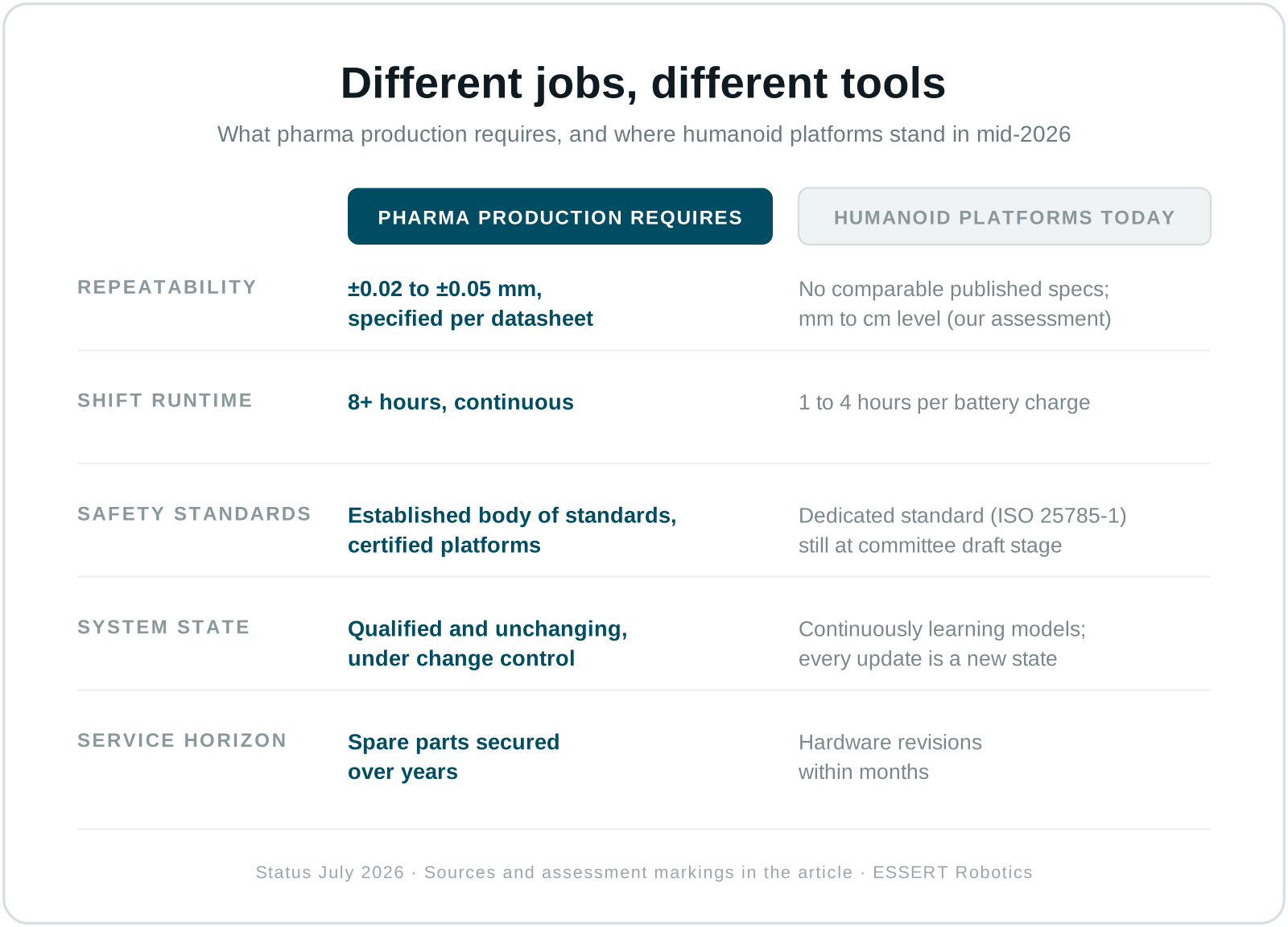
Then there is the operating reality. Most current humanoids run one to four hours per charge; a pharma shift needs eight or more [7]. Walking on two legs burns a large share of that energy just maintaining balance, which is why several vendors have pragmatically moved to wheeled bases. On a flat, structured pharma floor, legs solve a problem that does not exist.
And a question every operations leader will recognize: who services the machine in year three? Current humanoids are prototypes in continuous development, with new hardware revisions appearing within months. Multi-year spare parts commitments and service infrastructure, the unglamorous backbone of pharma equipment, are not there yet.
The economics are a bet on the future
An industrial-capable humanoid today costs roughly 180,000 to 220,000 EUR, based on quotes we obtained. Far cheaper platforms exist, but at payloads and capabilities built for research, not production.
More telling than the price tags is the market structure behind them. Hardly any humanoid manufacturer is profitable today; the sector runs largely on venture capital, and one leading company's valuation [8] now exceeds Goldman Sachs' projection for the entire humanoid robot market in 2035 [9]. That is simply where this market is in its lifecycle: enormous belief, invested ahead of revenue.
For a machine builder, that structure matters in a very practical way. We have seen young robotics markets consolidate before, and we expect this one will too: many entrants, few survivors. When we put a robot into a customer's line, we carry the warranty for the whole line. Betting that warranty on platforms that revise their hardware every few months is a risk we take very deliberately, or not at all.
Our position: robots are robots
Our business is robotic automation for pharma production, not any particular robot shape. The robots inside our systems come from established manufacturers today; our platform architecture does not care what the robot looks like. If a humanoid one day delivers real value for a customer process, we will integrate it exactly as pragmatically as we integrate six-axis robots and cobots today.
What would it take? Our checklist is short and public:
A published safety standard and platforms certified against it
Deterministic behavior, or a frozen, change-controlled model state that survives a GMP audit
Repeatability specifications that match the task
Multi-year spare parts and service commitments
Unit economics that stand without venture subsidy
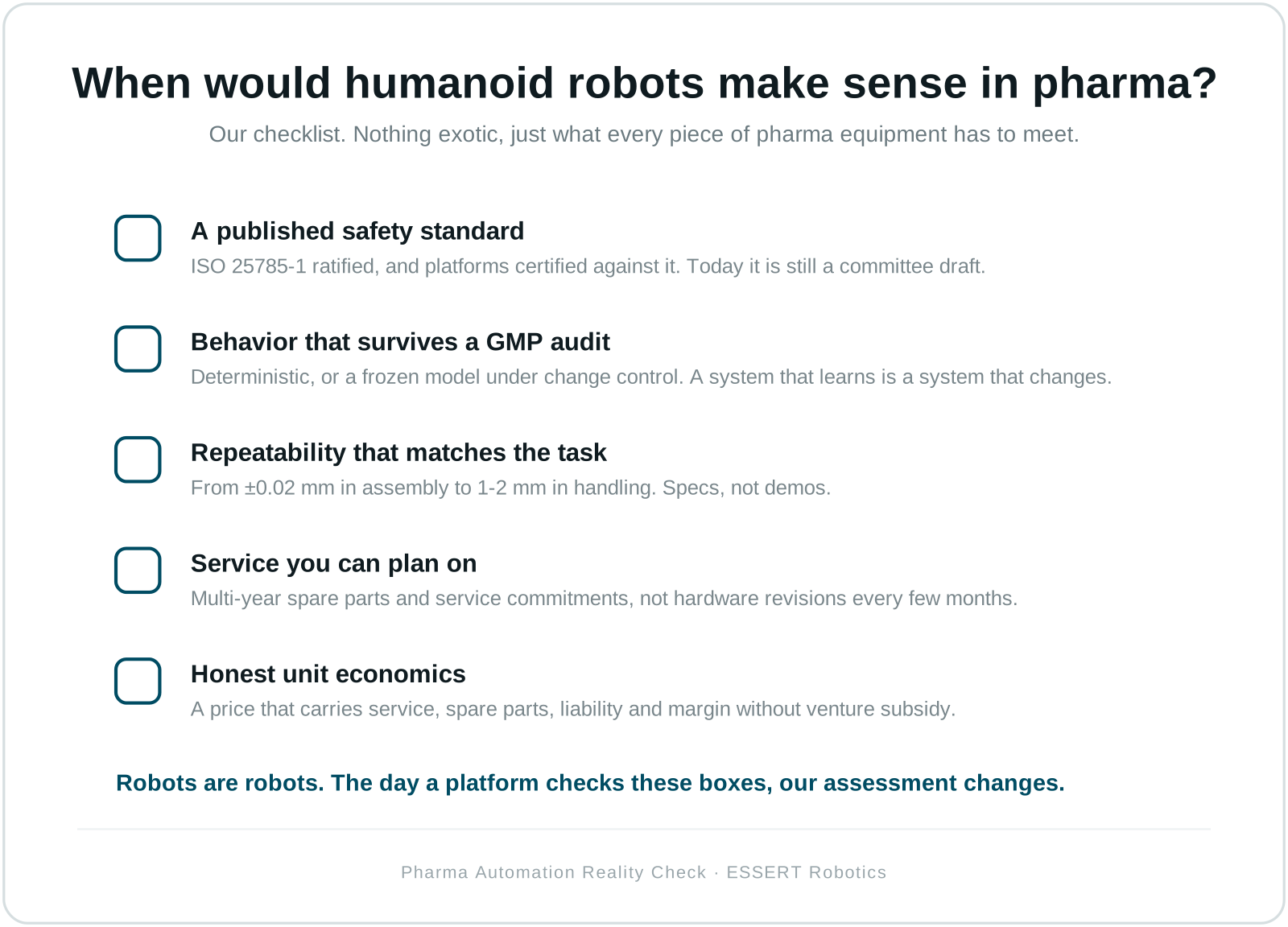
None of these are exotic demands. They are what every piece of equipment in a pharma plant has to meet, and what our systems meet today. The day a humanoid platform gets there, our assessment changes, and we will say so just as publicly.
Until then, our recommendation to pharma manufacturers is simple: watch the technology with genuine curiosity, and build your production on equipment you can qualify today.
Considering automation for your pharma production line? Talk to our team or explore our solutions.
Will humanoid robots replace industrial robots in pharma manufacturing?
Not in the foreseeable future. Pharma production requires qualified, deterministic equipment with sub-millimeter repeatability and multi-year service commitments. Current humanoid platforms are built for adaptability in unstructured environments, which is a different job. The two categories are more likely to coexist than to replace each other.
Are humanoid robots GMP-compliant?
No humanoid platform today carries GMP-relevant certifications comparable to established pharma automation. Beyond certificates, the deeper issue is conceptual: continuously learning systems conflict with the GMP principle of a qualified, unchanging system state. A frozen and change-controlled model can in principle be validated, but loses the adaptability that defines the category.
How precise are humanoid robots compared to industrial robots?
Industrial and collaborative robots achieve positional repeatability of roughly ±0.02 to ±0.05 mm. Current humanoid platforms do not publish comparable specifications, and available analyses place them above the millimeter range, which excludes typical pharma tasks like syringe assembly or precision device assembly.
Is there a safety standard for humanoid robots?
Not yet. ISO 25785-1, the dedicated standard for dynamically stable mobile robots, is under development (committee draft stage as of mid-2026), with ratification expected in 2027 at the earliest. Until it is published and platforms are certified against it, every industrial humanoid application requires an individual safety assessment.
When will humanoid robots be used in pharmaceutical production?
Realistically, after a published safety standard, certified platforms, GMP-compatible (frozen and change-controlled) AI models, and established service infrastructure exist. Each of these is progressing, and none is complete. Pilots in less regulated industries such as automotive logistics will come first and are already underway.
Sources
Figure AI: Helix: A Vision-Language-Action Model for Generalist Humanoid Control
Tech Briefs: Safety in Motion: Setting the Standard for Humanoid Robots
ISPE: GAMP 5 Guide, 2nd Edition: A Risk-Based Approach to Compliant GxP Computerized Systems
FANUC: CRX Collaborative Robot Series, technical specifications
GlobalSpec: Humanoid robots are tripping over their high energy demands
The Robot Report: Figure AI passes $1B with Series C funding toward humanoid robot development
Goldman Sachs: The global market for humanoid robots could reach $38 billion by 2035
Figures marked as "our assessment" or "quotes we obtained" reflect ESSERT's own market evaluation as of July 2026 and are deliberately not sourced to third parties.
Pharma manufacturers keep asking us the same question this year: "Can we already use humanoid robots in our production?"
It is a fair question. The videos are spectacular, the funding rounds are enormous, and the promise sounds like everything a production leader wants to hear: a machine that works like a person, learns like a person, and slots into any line without engineering effort.
We build robotic automation for pharmaceutical production every day. We qualify systems for GMP environments, we carry the warranty when a line does not run, and we have watched every robotics wave of the past two decades from the factory floor. So here is our honest assessment of where humanoid robots stand for pharma production in 2026: what genuinely impresses us, what does not hold up to scrutiny yet, and what would need to change.
The progress is real
Let us start with credit where it is due, because the engineering achievements are remarkable.
Today's leading humanoid platforms are no longer classically programmed. They are trained through teleoperation and imitation learning: human operators demonstrate tasks hundreds of hours at a time, and vision-language-action models learn control policies from that data. Some of these models now run entirely on the robot's onboard GPUs, and vendors report multi-hour autonomous shifts in logistics pilots [1].
Anyone who dismisses this as a gimmick has not looked closely. The development curve is steep, and we take it seriously.
And yet, when we assess these systems against what pharmaceutical production actually requires, a different picture emerges. Pharma is a special environment, with rules that do not bend.
There is no safety standard for humanoid robots yet
Every robot we install works under an established body of safety standards. For humanoid robots, that body of standards does not exist yet. The dedicated standard under development, ISO 25785-1, has reached committee draft stage [2]. Ratification timelines are still debated in the industry [3]; based on our own conversations around the standardization work, we do not expect certified platforms before late 2027.
Until then, no humanoid system is a "safe system" in the normative sense. Every single application would need its own case-by-case safety assessment. And humanoids on legs add a hazard class that existing robot standards never had to address: a robot that balances can fall. A robot on wheels, or one bolted to a frame, cannot.
This is not a permanent argument against the technology. Standards will come. But a pharma manufacturer planning a line today cannot qualify equipment against a standard that does not exist.
"Self-learning" collides with qualification
This is the point we consider most fundamental, and it gets far too little attention in the public debate.
Pharmaceutical production runs on qualified equipment. A qualified system must behave tomorrow exactly as it was validated to behave today. That principle is codified in the industry's guidance for computerized systems, GAMP 5 [4], and the ISPE's 2025 guide on artificial intelligence spells out how hard adaptive, non-deterministic systems are to validate under it [5].
Now consider what humanoid vendors present as their core feature: systems that learn and adapt continuously.
In most industries, that is a selling point. In a GMP environment, it is a validation problem. A robot that decides tomorrow to do something slightly different than today is, by definition, no longer in its qualified state. And every model update, however small, potentially creates a new system state that requires re-assessment under change control.
There is a technical workaround: freeze the model and validate the snapshot. It works. But it also surrenders the very adaptability the technology is being sold on, and you still re-validate at every update. What remains is an expensive way to do what deterministic automation already does.
The numbers pharma production actually runs on
Set aside the demos and look at specifications.
Collaborative and industrial robots deliver positional repeatability of ±0.02 to ±0.05 mm; the cobots we integrate are specified at ±0.04 mm [6]. Syringe, pen and autoinjector assembly live in that world. Current humanoid platforms do not publish repeatability figures in that class; from the demos and specifications we have reviewed, our assessment puts them at millimeter to centimeter level.
To be fair, not every pharma task needs hundredths of a millimeter. Vial, PFS or tub handling works with tolerances in the low millimeter range, and those are the tasks where humanoids would plausibly enter first. Based on what we have seen so far, current platforms do not reliably deliver even that. On cycle time, based on the demos and quotes we have evaluated, our assessment is that humanoids currently run a factor of five to ten behind dedicated systems on defined tasks.
Then there is the operating reality. Most current humanoids run one to four hours per charge; a pharma shift needs eight or more [7]. Walking on two legs burns a large share of that energy just maintaining balance, which is why several vendors have pragmatically moved to wheeled bases. On a flat, structured pharma floor, legs solve a problem that does not exist.
And a question every operations leader will recognize: who services the machine in year three? Current humanoids are prototypes in continuous development, with new hardware revisions appearing within months. Multi-year spare parts commitments and service infrastructure, the unglamorous backbone of pharma equipment, are not there yet.
The economics are a bet on the future
An industrial-capable humanoid today costs roughly 180,000 to 220,000 EUR, based on quotes we obtained. Far cheaper platforms exist, but at payloads and capabilities built for research, not production.
More telling than the price tags is the market structure behind them. Hardly any humanoid manufacturer is profitable today; the sector runs largely on venture capital, and one leading company's valuation [8] now exceeds Goldman Sachs' projection for the entire humanoid robot market in 2035 [9]. That is simply where this market is in its lifecycle: enormous belief, invested ahead of revenue.
For a machine builder, that structure matters in a very practical way. We have seen young robotics markets consolidate before, and we expect this one will too: many entrants, few survivors. When we put a robot into a customer's line, we carry the warranty for the whole line. Betting that warranty on platforms that revise their hardware every few months is a risk we take very deliberately, or not at all.
Our position: robots are robots
Our business is robotic automation for pharma production, not any particular robot shape. The robots inside our systems come from established manufacturers today; our platform architecture does not care what the robot looks like. If a humanoid one day delivers real value for a customer process, we will integrate it exactly as pragmatically as we integrate six-axis robots and cobots today.
What would it take? Our checklist is short and public:
A published safety standard and platforms certified against it
Deterministic behavior, or a frozen, change-controlled model state that survives a GMP audit
Repeatability specifications that match the task
Multi-year spare parts and service commitments
Unit economics that stand without venture subsidy
None of these are exotic demands. They are what every piece of equipment in a pharma plant has to meet, and what our systems meet today. The day a humanoid platform gets there, our assessment changes, and we will say so just as publicly.
Until then, our recommendation to pharma manufacturers is simple: watch the technology with genuine curiosity, and build your production on equipment you can qualify today.
Considering automation for your pharma production line? Talk to our team or explore our solutions.
Will humanoid robots replace industrial robots in pharma manufacturing?
Not in the foreseeable future. Pharma production requires qualified, deterministic equipment with sub-millimeter repeatability and multi-year service commitments. Current humanoid platforms are built for adaptability in unstructured environments, which is a different job. The two categories are more likely to coexist than to replace each other.
Are humanoid robots GMP-compliant?
No humanoid platform today carries GMP-relevant certifications comparable to established pharma automation. Beyond certificates, the deeper issue is conceptual: continuously learning systems conflict with the GMP principle of a qualified, unchanging system state. A frozen and change-controlled model can in principle be validated, but loses the adaptability that defines the category.
How precise are humanoid robots compared to industrial robots?
Industrial and collaborative robots achieve positional repeatability of roughly ±0.02 to ±0.05 mm. Current humanoid platforms do not publish comparable specifications, and available analyses place them above the millimeter range, which excludes typical pharma tasks like syringe assembly or precision device assembly.
Is there a safety standard for humanoid robots?
Not yet. ISO 25785-1, the dedicated standard for dynamically stable mobile robots, is under development (committee draft stage as of mid-2026), with ratification expected in 2027 at the earliest. Until it is published and platforms are certified against it, every industrial humanoid application requires an individual safety assessment.
When will humanoid robots be used in pharmaceutical production?
Realistically, after a published safety standard, certified platforms, GMP-compatible (frozen and change-controlled) AI models, and established service infrastructure exist. Each of these is progressing, and none is complete. Pilots in less regulated industries such as automotive logistics will come first and are already underway.
Sources
Figure AI: Helix: A Vision-Language-Action Model for Generalist Humanoid Control
Tech Briefs: Safety in Motion: Setting the Standard for Humanoid Robots
ISPE: GAMP 5 Guide, 2nd Edition: A Risk-Based Approach to Compliant GxP Computerized Systems
FANUC: CRX Collaborative Robot Series, technical specifications
GlobalSpec: Humanoid robots are tripping over their high energy demands
The Robot Report: Figure AI passes $1B with Series C funding toward humanoid robot development
Goldman Sachs: The global market for humanoid robots could reach $38 billion by 2035
Figures marked as "our assessment" or "quotes we obtained" reflect ESSERT's own market evaluation as of July 2026 and are deliberately not sourced to third parties.
Pharma manufacturers keep asking us the same question this year: "Can we already use humanoid robots in our production?"
It is a fair question. The videos are spectacular, the funding rounds are enormous, and the promise sounds like everything a production leader wants to hear: a machine that works like a person, learns like a person, and slots into any line without engineering effort.
We build robotic automation for pharmaceutical production every day. We qualify systems for GMP environments, we carry the warranty when a line does not run, and we have watched every robotics wave of the past two decades from the factory floor. So here is our honest assessment of where humanoid robots stand for pharma production in 2026: what genuinely impresses us, what does not hold up to scrutiny yet, and what would need to change.
The progress is real
Let us start with credit where it is due, because the engineering achievements are remarkable.
Today's leading humanoid platforms are no longer classically programmed. They are trained through teleoperation and imitation learning: human operators demonstrate tasks hundreds of hours at a time, and vision-language-action models learn control policies from that data. Some of these models now run entirely on the robot's onboard GPUs, and vendors report multi-hour autonomous shifts in logistics pilots [1].
Anyone who dismisses this as a gimmick has not looked closely. The development curve is steep, and we take it seriously.
And yet, when we assess these systems against what pharmaceutical production actually requires, a different picture emerges. Pharma is a special environment, with rules that do not bend.
There is no safety standard for humanoid robots yet
Every robot we install works under an established body of safety standards. For humanoid robots, that body of standards does not exist yet. The dedicated standard under development, ISO 25785-1, has reached committee draft stage [2]. Ratification timelines are still debated in the industry [3]; based on our own conversations around the standardization work, we do not expect certified platforms before late 2027.
Until then, no humanoid system is a "safe system" in the normative sense. Every single application would need its own case-by-case safety assessment. And humanoids on legs add a hazard class that existing robot standards never had to address: a robot that balances can fall. A robot on wheels, or one bolted to a frame, cannot.
This is not a permanent argument against the technology. Standards will come. But a pharma manufacturer planning a line today cannot qualify equipment against a standard that does not exist.
"Self-learning" collides with qualification
This is the point we consider most fundamental, and it gets far too little attention in the public debate.
Pharmaceutical production runs on qualified equipment. A qualified system must behave tomorrow exactly as it was validated to behave today. That principle is codified in the industry's guidance for computerized systems, GAMP 5 [4], and the ISPE's 2025 guide on artificial intelligence spells out how hard adaptive, non-deterministic systems are to validate under it [5].
Now consider what humanoid vendors present as their core feature: systems that learn and adapt continuously.
In most industries, that is a selling point. In a GMP environment, it is a validation problem. A robot that decides tomorrow to do something slightly different than today is, by definition, no longer in its qualified state. And every model update, however small, potentially creates a new system state that requires re-assessment under change control.
There is a technical workaround: freeze the model and validate the snapshot. It works. But it also surrenders the very adaptability the technology is being sold on, and you still re-validate at every update. What remains is an expensive way to do what deterministic automation already does.
The numbers pharma production actually runs on
Set aside the demos and look at specifications.
Collaborative and industrial robots deliver positional repeatability of ±0.02 to ±0.05 mm; the cobots we integrate are specified at ±0.04 mm [6]. Syringe, pen and autoinjector assembly live in that world. Current humanoid platforms do not publish repeatability figures in that class; from the demos and specifications we have reviewed, our assessment puts them at millimeter to centimeter level.
To be fair, not every pharma task needs hundredths of a millimeter. Vial, PFS or tub handling works with tolerances in the low millimeter range, and those are the tasks where humanoids would plausibly enter first. Based on what we have seen so far, current platforms do not reliably deliver even that. On cycle time, based on the demos and quotes we have evaluated, our assessment is that humanoids currently run a factor of five to ten behind dedicated systems on defined tasks.
Then there is the operating reality. Most current humanoids run one to four hours per charge; a pharma shift needs eight or more [7]. Walking on two legs burns a large share of that energy just maintaining balance, which is why several vendors have pragmatically moved to wheeled bases. On a flat, structured pharma floor, legs solve a problem that does not exist.
And a question every operations leader will recognize: who services the machine in year three? Current humanoids are prototypes in continuous development, with new hardware revisions appearing within months. Multi-year spare parts commitments and service infrastructure, the unglamorous backbone of pharma equipment, are not there yet.
The economics are a bet on the future
An industrial-capable humanoid today costs roughly 180,000 to 220,000 EUR, based on quotes we obtained. Far cheaper platforms exist, but at payloads and capabilities built for research, not production.
More telling than the price tags is the market structure behind them. Hardly any humanoid manufacturer is profitable today; the sector runs largely on venture capital, and one leading company's valuation [8] now exceeds Goldman Sachs' projection for the entire humanoid robot market in 2035 [9]. That is simply where this market is in its lifecycle: enormous belief, invested ahead of revenue.
For a machine builder, that structure matters in a very practical way. We have seen young robotics markets consolidate before, and we expect this one will too: many entrants, few survivors. When we put a robot into a customer's line, we carry the warranty for the whole line. Betting that warranty on platforms that revise their hardware every few months is a risk we take very deliberately, or not at all.
Our position: robots are robots
Our business is robotic automation for pharma production, not any particular robot shape. The robots inside our systems come from established manufacturers today; our platform architecture does not care what the robot looks like. If a humanoid one day delivers real value for a customer process, we will integrate it exactly as pragmatically as we integrate six-axis robots and cobots today.
What would it take? Our checklist is short and public:
A published safety standard and platforms certified against it
Deterministic behavior, or a frozen, change-controlled model state that survives a GMP audit
Repeatability specifications that match the task
Multi-year spare parts and service commitments
Unit economics that stand without venture subsidy
None of these are exotic demands. They are what every piece of equipment in a pharma plant has to meet, and what our systems meet today. The day a humanoid platform gets there, our assessment changes, and we will say so just as publicly.
Until then, our recommendation to pharma manufacturers is simple: watch the technology with genuine curiosity, and build your production on equipment you can qualify today.
Considering automation for your pharma production line? Talk to our team or explore our solutions.
Will humanoid robots replace industrial robots in pharma manufacturing?
Not in the foreseeable future. Pharma production requires qualified, deterministic equipment with sub-millimeter repeatability and multi-year service commitments. Current humanoid platforms are built for adaptability in unstructured environments, which is a different job. The two categories are more likely to coexist than to replace each other.
Are humanoid robots GMP-compliant?
No humanoid platform today carries GMP-relevant certifications comparable to established pharma automation. Beyond certificates, the deeper issue is conceptual: continuously learning systems conflict with the GMP principle of a qualified, unchanging system state. A frozen and change-controlled model can in principle be validated, but loses the adaptability that defines the category.
How precise are humanoid robots compared to industrial robots?
Industrial and collaborative robots achieve positional repeatability of roughly ±0.02 to ±0.05 mm. Current humanoid platforms do not publish comparable specifications, and available analyses place them above the millimeter range, which excludes typical pharma tasks like syringe assembly or precision device assembly.
Is there a safety standard for humanoid robots?
Not yet. ISO 25785-1, the dedicated standard for dynamically stable mobile robots, is under development (committee draft stage as of mid-2026), with ratification expected in 2027 at the earliest. Until it is published and platforms are certified against it, every industrial humanoid application requires an individual safety assessment.
When will humanoid robots be used in pharmaceutical production?
Realistically, after a published safety standard, certified platforms, GMP-compatible (frozen and change-controlled) AI models, and established service infrastructure exist. Each of these is progressing, and none is complete. Pilots in less regulated industries such as automotive logistics will come first and are already underway.
Sources
Figure AI: Helix: A Vision-Language-Action Model for Generalist Humanoid Control
Tech Briefs: Safety in Motion: Setting the Standard for Humanoid Robots
ISPE: GAMP 5 Guide, 2nd Edition: A Risk-Based Approach to Compliant GxP Computerized Systems
FANUC: CRX Collaborative Robot Series, technical specifications
GlobalSpec: Humanoid robots are tripping over their high energy demands
The Robot Report: Figure AI passes $1B with Series C funding toward humanoid robot development
Goldman Sachs: The global market for humanoid robots could reach $38 billion by 2035
Figures marked as "our assessment" or "quotes we obtained" reflect ESSERT's own market evaluation as of July 2026 and are deliberately not sourced to third parties.
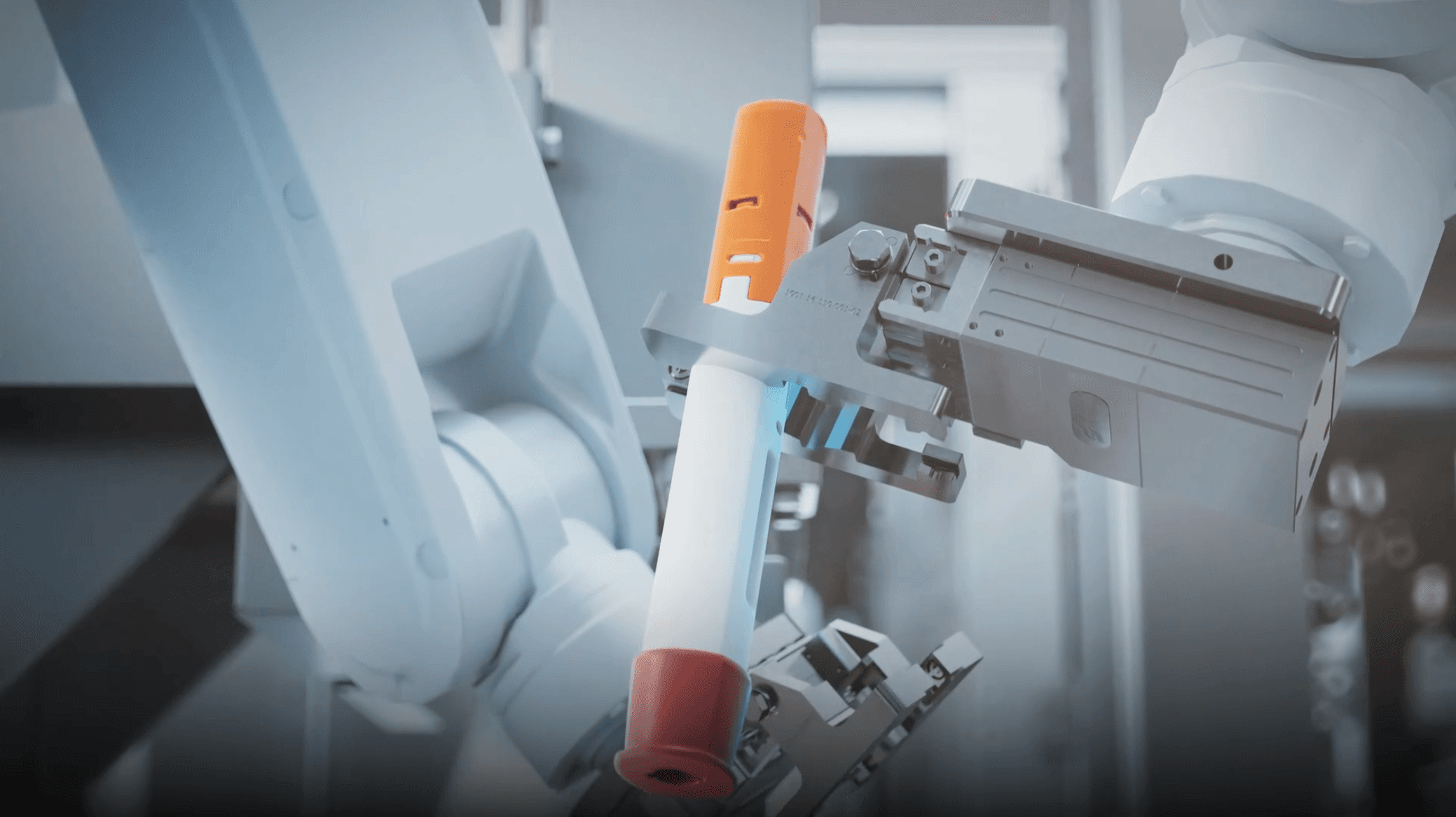
Let’s Talk
Automation is a long-term commitment. We partner with manufacturers who think in lifecycles. If you are evaluating automation for a new product, scaling a process, or preparing for a future pipeline - let’s talk.
Let’s Talk
Automation is a long-term commitment. We partner with manufacturers who think in lifecycles. If you are evaluating automation for a new product, scaling a process, or preparing for a future pipeline - let’s talk.
Let’s Talk
Automation is a long-term commitment. We partner with manufacturers who think in lifecycles. If you are evaluating automation for a new product, scaling a process, or preparing for a future pipeline - let’s talk.
See what's new
Humanoid Robots in Pharma Manufacturing: What Is Hype, What Is Real
Pharma manufacturers keep asking about humanoid robots. A machine builder's assessment: safety standards, GMP qualification, precision, and what would need to change.
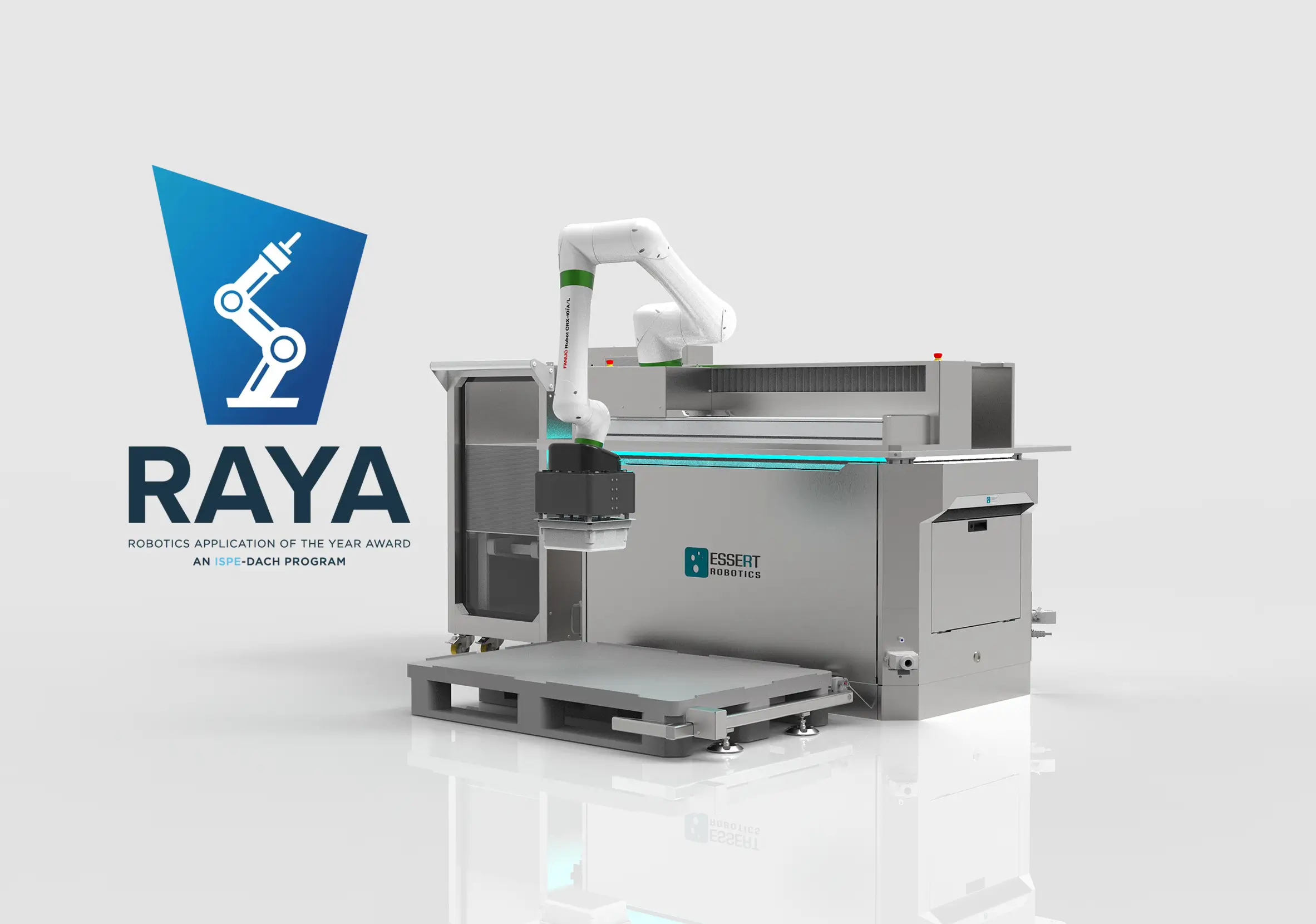
What Is Robotic Tub Handling in Pharma Fill and Finish?
What robotic tub handling is, how it works from infeed to palletizing, and why it closes the last manual gap in fill and finish.

What Is High-Mix Low-Volume (HMLV) Manufacturing in Pharma and MedTech?
Many products, small batches: what HMLV manufacturing is, why rigid lines fail under high mix, and what modular automation changes.
See what's new
Humanoid Robots in Pharma Manufacturing: What Is Hype, What Is Real
Pharma manufacturers keep asking about humanoid robots. A machine builder's assessment: safety standards, GMP qualification, precision, and what would need to change.
What Is Robotic Tub Handling in Pharma Fill and Finish?
What robotic tub handling is, how it works from infeed to palletizing, and why it closes the last manual gap in fill and finish.
What Is High-Mix Low-Volume (HMLV) Manufacturing in Pharma and MedTech?
Many products, small batches: what HMLV manufacturing is, why rigid lines fail under high mix, and what modular automation changes.
See what's new
Humanoid Robots in Pharma Manufacturing: What Is Hype, What Is Real
Pharma manufacturers keep asking about humanoid robots. A machine builder's assessment: safety standards, GMP qualification, precision, and what would need to change.
What Is Robotic Tub Handling in Pharma Fill and Finish?
What robotic tub handling is, how it works from infeed to palletizing, and why it closes the last manual gap in fill and finish.
What Is High-Mix Low-Volume (HMLV) Manufacturing in Pharma and MedTech?
Many products, small batches: what HMLV manufacturing is, why rigid lines fail under high mix, and what modular automation changes.
Contact our team
From initial questions to your custom MicroFactory solutions – our team is here to assist you.
Contact our team
From initial questions to your custom MicroFactory solutions – our team is here to assist you.
Contact our team
From initial questions to your custom MicroFactory solutions – our team is here to assist you.
