What Is High-Mix Low-Volume (HMLV) Manufacturing in Pharma and MedTech?


Ayhan Akyüz
•
Articles
What Is High-Mix Low-Volume (HMLV) Manufacturing in Pharma and MedTech?
Ayhan Akyüz
•
Articles
What Is High-Mix Low-Volume (HMLV) Manufacturing in Pharma and MedTech?
Ayhan Akyüz
•
Articles
High-mix low-volume (HMLV) manufacturing is a production model in which a facility produces many different products, formats, or variants in small batch sizes, sometimes down to batch size 1. The defining challenge is not output quantity. It is changeover: how fast and how reliably a line can switch from one product to the next without losing time, quality, or its validated state.
Why are pharma and medtech moving to HMLV?
The product portfolio changed. Personalized therapies, orphan drugs, clinical trial supply, biologics in small patient populations, and combination products all mean more SKUs at lower volumes per SKU. A syringe line that once ran one format for years now faces frequent format changes, and a device assembly line has to cover development, clinical, and commercial phases of multiple products at once. Blockbuster-era production logic does not map onto that portfolio.
Why does traditional automation fail in HMLV?
Manufacturing automation was built for volume, not for variety. Classic monolithic lines earn their cost through long runs of identical product: mechanical format parts, fixed tooling, and a validation package tied to one configuration. In an HMLV setting that same design becomes the bottleneck. Every product switch means mechanical changeover, requalification effort, and downtime. Below a certain batch size, the line spends more time being converted than producing, which is why so much HMLV production still runs manually today.
What does HMLV-capable automation look like?
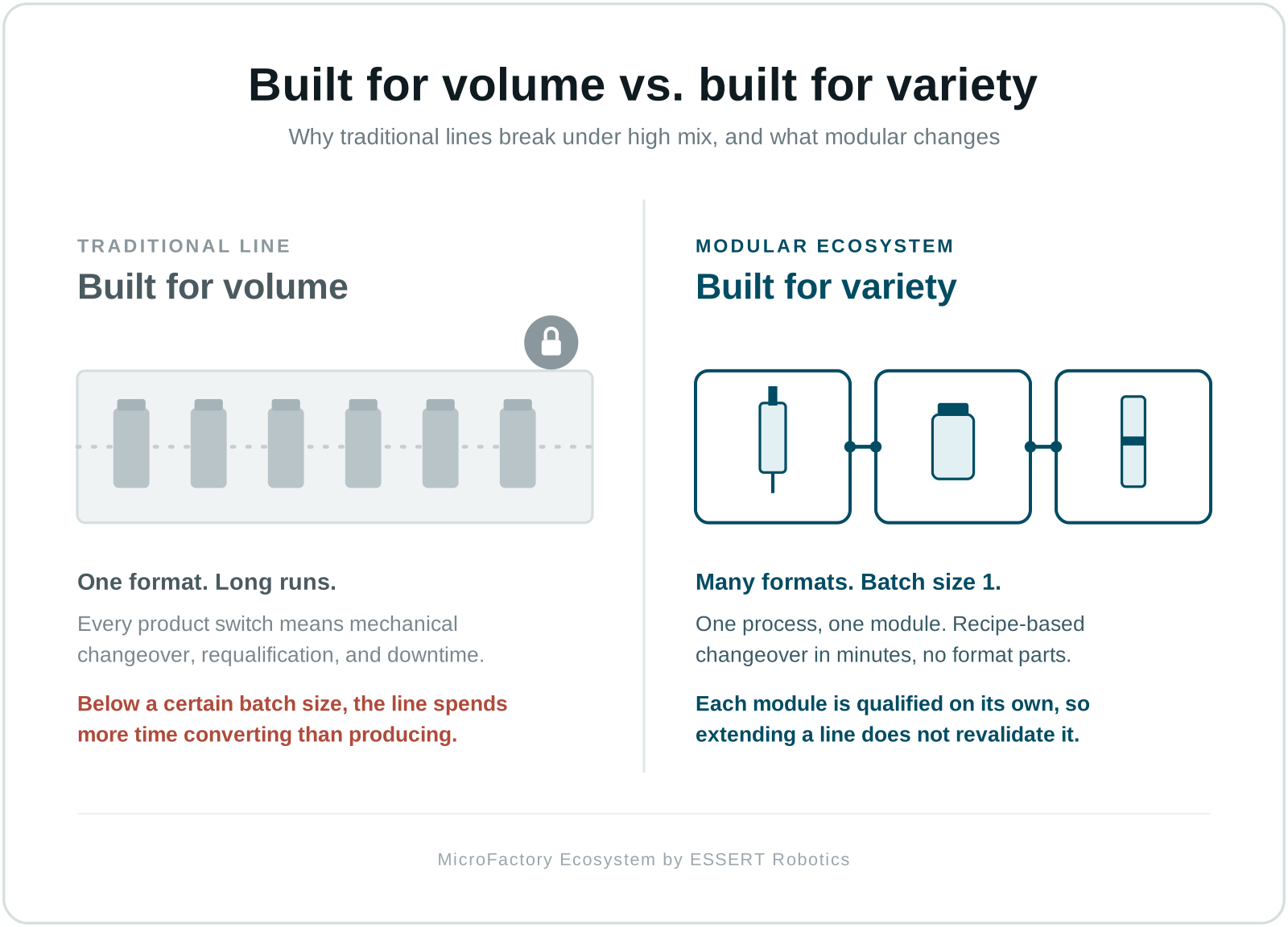
Modularity: standardized process modules ("one process, one module") that can be combined, extended, and reused instead of one rigid line. Some tasks run as a single autonomous module; assembly processes chain several modules, each covering exactly one process step.
Software-driven changeover: recipe-based switching in minutes, without mechanical format parts. Camera-based line clearance replaces manual checks.
Batch size 1 capability: the smallest batches remain economical because changeover cost approaches zero.
Modular qualification: each module is tested and qualified individually before delivery, so extending a line does not mean revalidating the whole line.
Own PLC per module: modules run standalone or combined, which keeps configurations flexible.
This is the architecture behind the MicroFactory Ecosystem by ESSERT Robotics, running across more than 450 modules worldwide.
Philip Schneider, Drug Product Manufacturing Technology Lead at Roche: "At Roche, we were looking for a modular, flexible solution for assembling different devices and found this solution in ESSERT's MicroFactory Ecosystem."
What is HMLV inspection?
Visual inspection has the same problem in sharper form: industry surveys by the Parenteral Drug Association (PDA) consistently show that manual inspection remains the most widely used method for parenteral drug products, largely because inspection machines were built for long runs of one format. HMLV inspection systems answer with fast, software-driven format changes across syringes, vials, and cartridges in one cell. A current example is ALVA, which inspects up to 20 containers per minute with up to 32 minutes of autonomous runtime across three container types. The division of work behind it: inspection technology, machine concept, and application expertise come from Körber; the robotic in- and outfeed automation comes from ESSERT Robotics.
What is HMLV assembly?
Device and syringe assembly under high mix relies on standardized core functions (feeding, joining, marking, labeling, testing) that adapt to very different products with minimal retooling. The same platform then carries a product from clinical to commercial scale, so scale-up does not mean replacing the line. Typical applications range from autoinjectors and pen injectors to inhalers and diagnostic devices.
What does HMLV stand for?
High-mix low-volume: many different products or formats, each produced in small quantities.
Is HMLV about scaling production up?
No. HMLV is about variety, not volume. The bottleneck is changeover time and validation effort between products, not maximum output.
What batch sizes count as low volume?
There is no fixed threshold. The practical test: if changeover and requalification effort dominate the economics of a batch, the line is operating in HMLV territory. Modular platforms stay economical down to batch size 1.
Why is so much HMLV production still manual?
Because traditional automation only pays off with long runs of identical product. Manual work absorbed the variety instead. Modular, software-changeover automation removes that constraint.
Does HMLV automation work in cleanrooms?
Yes. GMP-compliant versions in stainless steel are approved up to ISO Class 5, with full audit trails and per-device traceability.
High-mix low-volume (HMLV) manufacturing is a production model in which a facility produces many different products, formats, or variants in small batch sizes, sometimes down to batch size 1. The defining challenge is not output quantity. It is changeover: how fast and how reliably a line can switch from one product to the next without losing time, quality, or its validated state.
Why are pharma and medtech moving to HMLV?
The product portfolio changed. Personalized therapies, orphan drugs, clinical trial supply, biologics in small patient populations, and combination products all mean more SKUs at lower volumes per SKU. A syringe line that once ran one format for years now faces frequent format changes, and a device assembly line has to cover development, clinical, and commercial phases of multiple products at once. Blockbuster-era production logic does not map onto that portfolio.
Why does traditional automation fail in HMLV?
Manufacturing automation was built for volume, not for variety. Classic monolithic lines earn their cost through long runs of identical product: mechanical format parts, fixed tooling, and a validation package tied to one configuration. In an HMLV setting that same design becomes the bottleneck. Every product switch means mechanical changeover, requalification effort, and downtime. Below a certain batch size, the line spends more time being converted than producing, which is why so much HMLV production still runs manually today.
What does HMLV-capable automation look like?
Modularity: standardized process modules ("one process, one module") that can be combined, extended, and reused instead of one rigid line. Some tasks run as a single autonomous module; assembly processes chain several modules, each covering exactly one process step.
Software-driven changeover: recipe-based switching in minutes, without mechanical format parts. Camera-based line clearance replaces manual checks.
Batch size 1 capability: the smallest batches remain economical because changeover cost approaches zero.
Modular qualification: each module is tested and qualified individually before delivery, so extending a line does not mean revalidating the whole line.
Own PLC per module: modules run standalone or combined, which keeps configurations flexible.
This is the architecture behind the MicroFactory Ecosystem by ESSERT Robotics, running across more than 450 modules worldwide.
Philip Schneider, Drug Product Manufacturing Technology Lead at Roche: "At Roche, we were looking for a modular, flexible solution for assembling different devices and found this solution in ESSERT's MicroFactory Ecosystem."
What is HMLV inspection?
Visual inspection has the same problem in sharper form: industry surveys by the Parenteral Drug Association (PDA) consistently show that manual inspection remains the most widely used method for parenteral drug products, largely because inspection machines were built for long runs of one format. HMLV inspection systems answer with fast, software-driven format changes across syringes, vials, and cartridges in one cell. A current example is ALVA, which inspects up to 20 containers per minute with up to 32 minutes of autonomous runtime across three container types. The division of work behind it: inspection technology, machine concept, and application expertise come from Körber; the robotic in- and outfeed automation comes from ESSERT Robotics.
What is HMLV assembly?
Device and syringe assembly under high mix relies on standardized core functions (feeding, joining, marking, labeling, testing) that adapt to very different products with minimal retooling. The same platform then carries a product from clinical to commercial scale, so scale-up does not mean replacing the line. Typical applications range from autoinjectors and pen injectors to inhalers and diagnostic devices.
What does HMLV stand for?
High-mix low-volume: many different products or formats, each produced in small quantities.
Is HMLV about scaling production up?
No. HMLV is about variety, not volume. The bottleneck is changeover time and validation effort between products, not maximum output.
What batch sizes count as low volume?
There is no fixed threshold. The practical test: if changeover and requalification effort dominate the economics of a batch, the line is operating in HMLV territory. Modular platforms stay economical down to batch size 1.
Why is so much HMLV production still manual?
Because traditional automation only pays off with long runs of identical product. Manual work absorbed the variety instead. Modular, software-changeover automation removes that constraint.
Does HMLV automation work in cleanrooms?
Yes. GMP-compliant versions in stainless steel are approved up to ISO Class 5, with full audit trails and per-device traceability.
High-mix low-volume (HMLV) manufacturing is a production model in which a facility produces many different products, formats, or variants in small batch sizes, sometimes down to batch size 1. The defining challenge is not output quantity. It is changeover: how fast and how reliably a line can switch from one product to the next without losing time, quality, or its validated state.
Why are pharma and medtech moving to HMLV?
The product portfolio changed. Personalized therapies, orphan drugs, clinical trial supply, biologics in small patient populations, and combination products all mean more SKUs at lower volumes per SKU. A syringe line that once ran one format for years now faces frequent format changes, and a device assembly line has to cover development, clinical, and commercial phases of multiple products at once. Blockbuster-era production logic does not map onto that portfolio.
Why does traditional automation fail in HMLV?
Manufacturing automation was built for volume, not for variety. Classic monolithic lines earn their cost through long runs of identical product: mechanical format parts, fixed tooling, and a validation package tied to one configuration. In an HMLV setting that same design becomes the bottleneck. Every product switch means mechanical changeover, requalification effort, and downtime. Below a certain batch size, the line spends more time being converted than producing, which is why so much HMLV production still runs manually today.
What does HMLV-capable automation look like?
Modularity: standardized process modules ("one process, one module") that can be combined, extended, and reused instead of one rigid line. Some tasks run as a single autonomous module; assembly processes chain several modules, each covering exactly one process step.
Software-driven changeover: recipe-based switching in minutes, without mechanical format parts. Camera-based line clearance replaces manual checks.
Batch size 1 capability: the smallest batches remain economical because changeover cost approaches zero.
Modular qualification: each module is tested and qualified individually before delivery, so extending a line does not mean revalidating the whole line.
Own PLC per module: modules run standalone or combined, which keeps configurations flexible.
This is the architecture behind the MicroFactory Ecosystem by ESSERT Robotics, running across more than 450 modules worldwide.
Philip Schneider, Drug Product Manufacturing Technology Lead at Roche: "At Roche, we were looking for a modular, flexible solution for assembling different devices and found this solution in ESSERT's MicroFactory Ecosystem."
What is HMLV inspection?
Visual inspection has the same problem in sharper form: industry surveys by the Parenteral Drug Association (PDA) consistently show that manual inspection remains the most widely used method for parenteral drug products, largely because inspection machines were built for long runs of one format. HMLV inspection systems answer with fast, software-driven format changes across syringes, vials, and cartridges in one cell. A current example is ALVA, which inspects up to 20 containers per minute with up to 32 minutes of autonomous runtime across three container types. The division of work behind it: inspection technology, machine concept, and application expertise come from Körber; the robotic in- and outfeed automation comes from ESSERT Robotics.
What is HMLV assembly?
Device and syringe assembly under high mix relies on standardized core functions (feeding, joining, marking, labeling, testing) that adapt to very different products with minimal retooling. The same platform then carries a product from clinical to commercial scale, so scale-up does not mean replacing the line. Typical applications range from autoinjectors and pen injectors to inhalers and diagnostic devices.
What does HMLV stand for?
High-mix low-volume: many different products or formats, each produced in small quantities.
Is HMLV about scaling production up?
No. HMLV is about variety, not volume. The bottleneck is changeover time and validation effort between products, not maximum output.
What batch sizes count as low volume?
There is no fixed threshold. The practical test: if changeover and requalification effort dominate the economics of a batch, the line is operating in HMLV territory. Modular platforms stay economical down to batch size 1.
Why is so much HMLV production still manual?
Because traditional automation only pays off with long runs of identical product. Manual work absorbed the variety instead. Modular, software-changeover automation removes that constraint.
Does HMLV automation work in cleanrooms?
Yes. GMP-compliant versions in stainless steel are approved up to ISO Class 5, with full audit trails and per-device traceability.
Let’s Talk
Automation is a long-term commitment. We partner with manufacturers who think in lifecycles. If you are evaluating automation for a new product, scaling a process, or preparing for a future pipeline - let’s talk.
Let’s Talk
Automation is a long-term commitment. We partner with manufacturers who think in lifecycles. If you are evaluating automation for a new product, scaling a process, or preparing for a future pipeline - let’s talk.
Let’s Talk
Automation is a long-term commitment. We partner with manufacturers who think in lifecycles. If you are evaluating automation for a new product, scaling a process, or preparing for a future pipeline - let’s talk.
See what's new
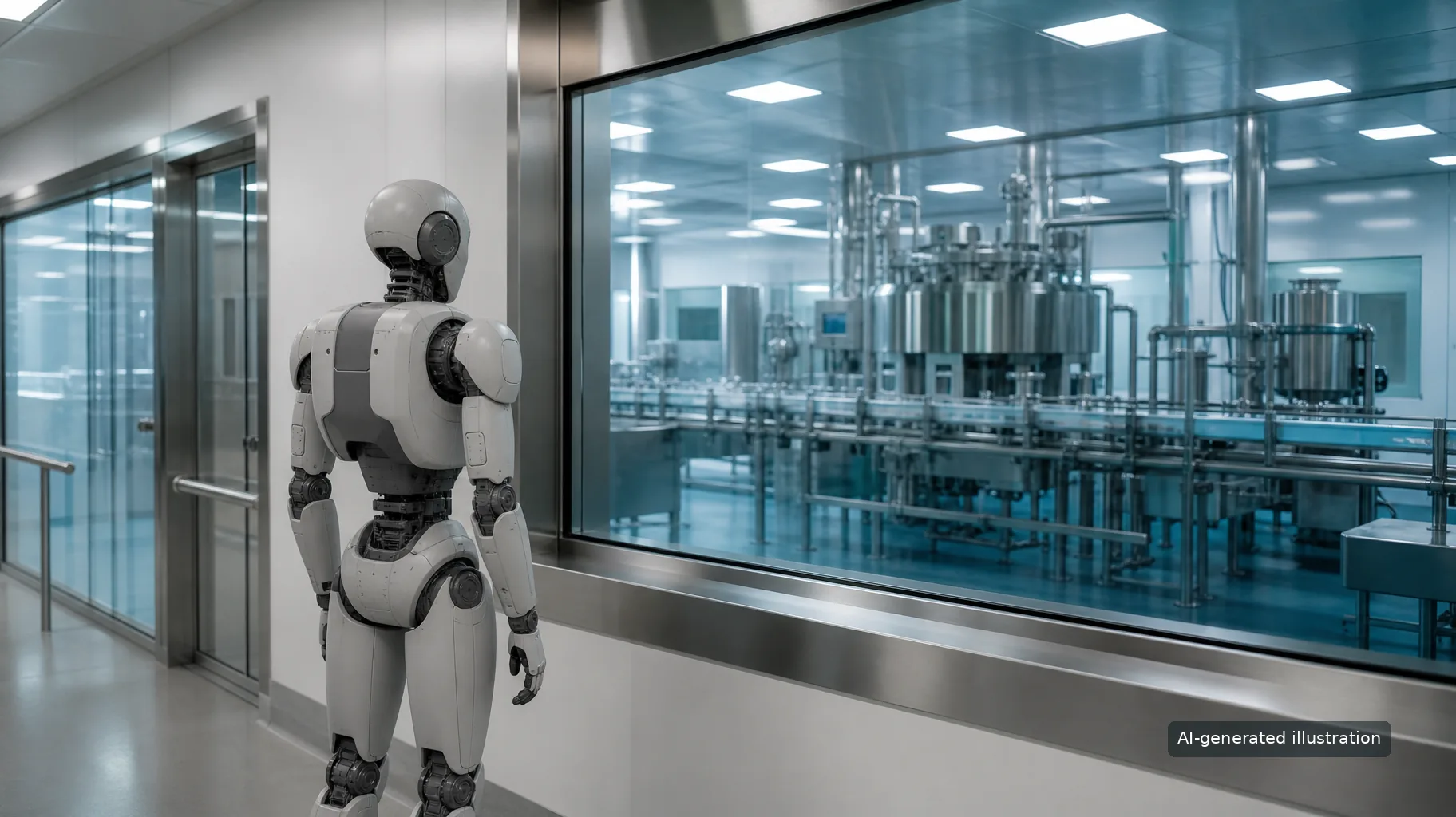
Humanoid Robots in Pharma Manufacturing: What Is Hype, What Is Real
Pharma manufacturers keep asking about humanoid robots. A machine builder's assessment: safety standards, GMP qualification, precision, and what would need to change.
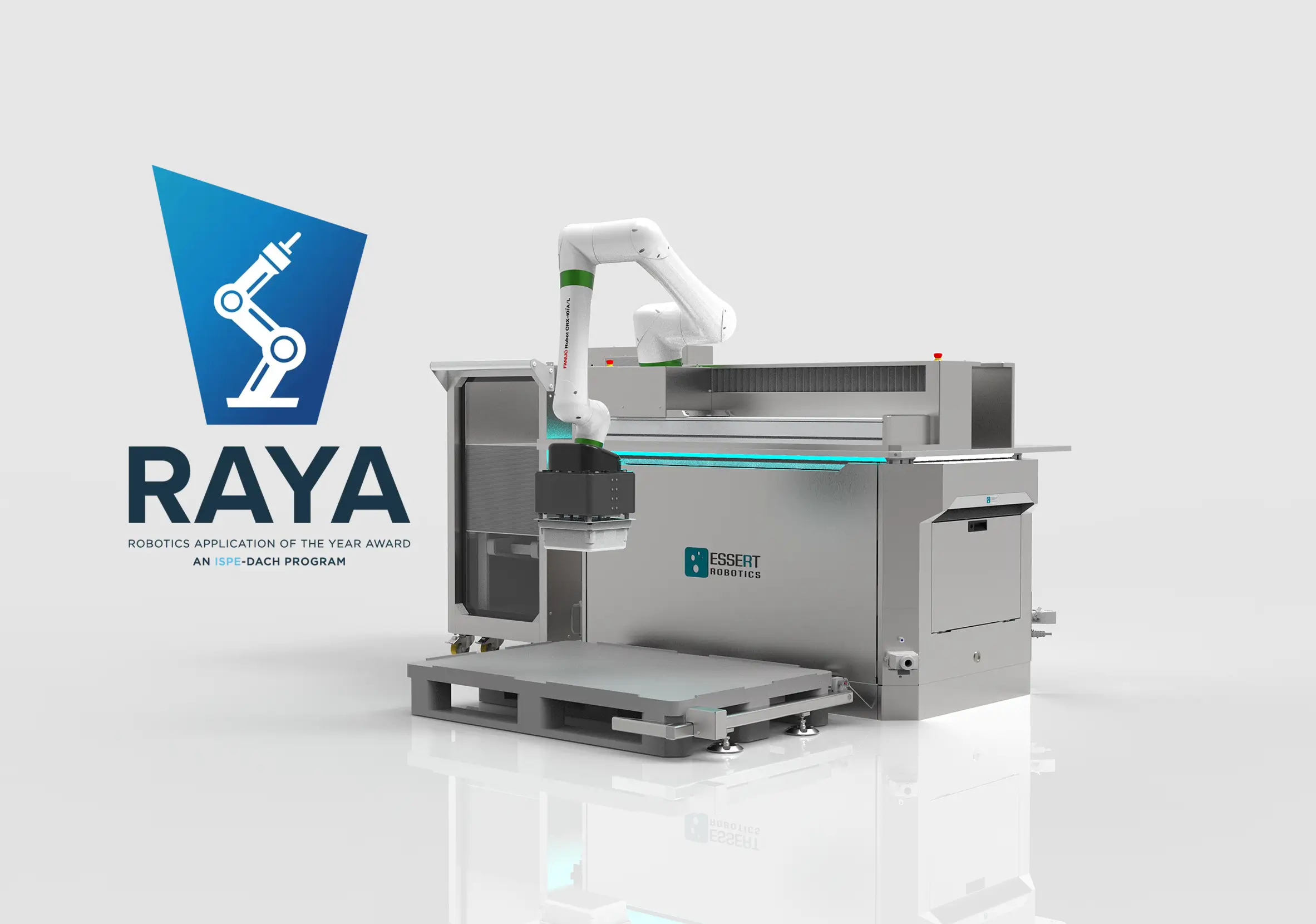
What Is Robotic Tub Handling in Pharma Fill and Finish?
What robotic tub handling is, how it works from infeed to palletizing, and why it closes the last manual gap in fill and finish.
What Is High-Mix Low-Volume (HMLV) Manufacturing in Pharma and MedTech?
Many products, small batches: what HMLV manufacturing is, why rigid lines fail under high mix, and what modular automation changes.
See what's new
Humanoid Robots in Pharma Manufacturing: What Is Hype, What Is Real
Pharma manufacturers keep asking about humanoid robots. A machine builder's assessment: safety standards, GMP qualification, precision, and what would need to change.
What Is Robotic Tub Handling in Pharma Fill and Finish?
What robotic tub handling is, how it works from infeed to palletizing, and why it closes the last manual gap in fill and finish.
What Is High-Mix Low-Volume (HMLV) Manufacturing in Pharma and MedTech?
Many products, small batches: what HMLV manufacturing is, why rigid lines fail under high mix, and what modular automation changes.
See what's new
Humanoid Robots in Pharma Manufacturing: What Is Hype, What Is Real
Pharma manufacturers keep asking about humanoid robots. A machine builder's assessment: safety standards, GMP qualification, precision, and what would need to change.
What Is Robotic Tub Handling in Pharma Fill and Finish?
What robotic tub handling is, how it works from infeed to palletizing, and why it closes the last manual gap in fill and finish.
What Is High-Mix Low-Volume (HMLV) Manufacturing in Pharma and MedTech?
Many products, small batches: what HMLV manufacturing is, why rigid lines fail under high mix, and what modular automation changes.
Contact our team
From initial questions to your custom MicroFactory solutions – our team is here to assist you.
Contact our team
From initial questions to your custom MicroFactory solutions – our team is here to assist you.
Contact our team
From initial questions to your custom MicroFactory solutions – our team is here to assist you.
