Automating the Full Blister Line: From Product Loading to Inspection

Stephan Fundinger
•
Articles
Automating the Full Blister Line: From Product Loading to Inspection
Stephan Fundinger
•
Articles
Automating the Full Blister Line: From Product Loading to Inspection
Stephan Fundinger
•
Articles
Introduction
Ask most Pharma or MedTech production managers where their biggest packaging bottleneck is, and they will point somewhere on the blister line. It might be the manual product loading step, where operators place sensitive devices into blister cavities by hand. Or the Tyvek feeding station, where sheets are separated and aligned manually before every seal. Or the punching step downstream, where singulated blisters need to be moved, inspected, and handed off without introducing damage or contamination.
The common denominator: each step has historically been treated as a standalone automation problem. A Tyvek feeder here, an inspection camera there, a robot for product loading if budget allows.
The result is a blister line that is semi-automated at best, dependent on manual handoffs between each step, and difficult to validate comprehensively.
This article makes the case for a different approach: automating the blister process end-to-end on a single integrated platform, and explains why this delivers better outcomes in quality, compliance, and total cost of ownership than piecemeal solutions.
The Complete Blister Process: Five Steps, Multiple Manual Touchpoints
Understanding where automation adds value requires looking at the full process, not just individual steps.
Step 1: Product Equipping
Medical products arrive from upstream processes, whether syringes from filling lines, surgical instruments from assembly, or combination devices from MedTech manufacturing. Each product needs to be placed precisely into its blister cavity in the correct orientation. Misplacement at this stage causes defects that only become visible after sealing, wasting both product and packaging material.
Step 2: Tyvek Handling and Feeding
Tyvek sheets must be separated from the stack individually without tearing, fed to the sealing machine in the correct orientation, and verified for correct label printing before the seal is made. Manual feeding introduces the risk of double-feeds, misalignment, and missed label verification. Any of these failures can result in a compromised or non-compliant sealed blister.
Step 3: Sealing
The sealing machine closes the sterile barrier by applying Tyvek to the formed blister under controlled temperature, pressure, and dwell time. This is typically the most heavily validated step in the process. Consistent sealing outcomes depend directly on consistent upstream handling of both the blister and the Tyvek.
Step 4: Blister Punching & Singulation
After sealing, multi-format blister sheets are punched or cut into individual blister units. This step requires precise mechanical handling to avoid damage to the sealed edge or the Tyvek surface. Products that are mishandled here can fail inspection or arrive at the end customer with compromised packaging integrity.
Step 5: Inspection and Transfer
Singulated blisters need to be inspected before final packing. This can mean automated camera-based inspection checking seal geometry, label presence and readability, and product position. Alternatively, blisters can be transferred to a manual inspection workstation where operators perform final checks. Either way, the transfer process needs to be controlled to avoid contamination and maintain traceability.
Why Manual Steps at Any Point Create System-Level Problems
The challenge with partial automation is that quality and documentation are only as strong as the weakest manual link in the chain.
A robot that loads products perfectly into blister cavities cannot compensate for misaligned Tyvek feeding two steps later. An inspection camera that catches every seal defect cannot recover product that was damaged during manual punching handoff. A validated sealing machine cannot guarantee consistent output if the operator feeding it varies their placement slightly from cycle to cycle.
End-to-end automation removes this dependency. Every step is controlled, documented, and repeatable. Traceability runs from product identity through equipping, sealing parameters, inspection results, and final pack, creating a complete data record per unit without relying on operator notes or manual logs.
What End-to-End Blister Automation Looks Like
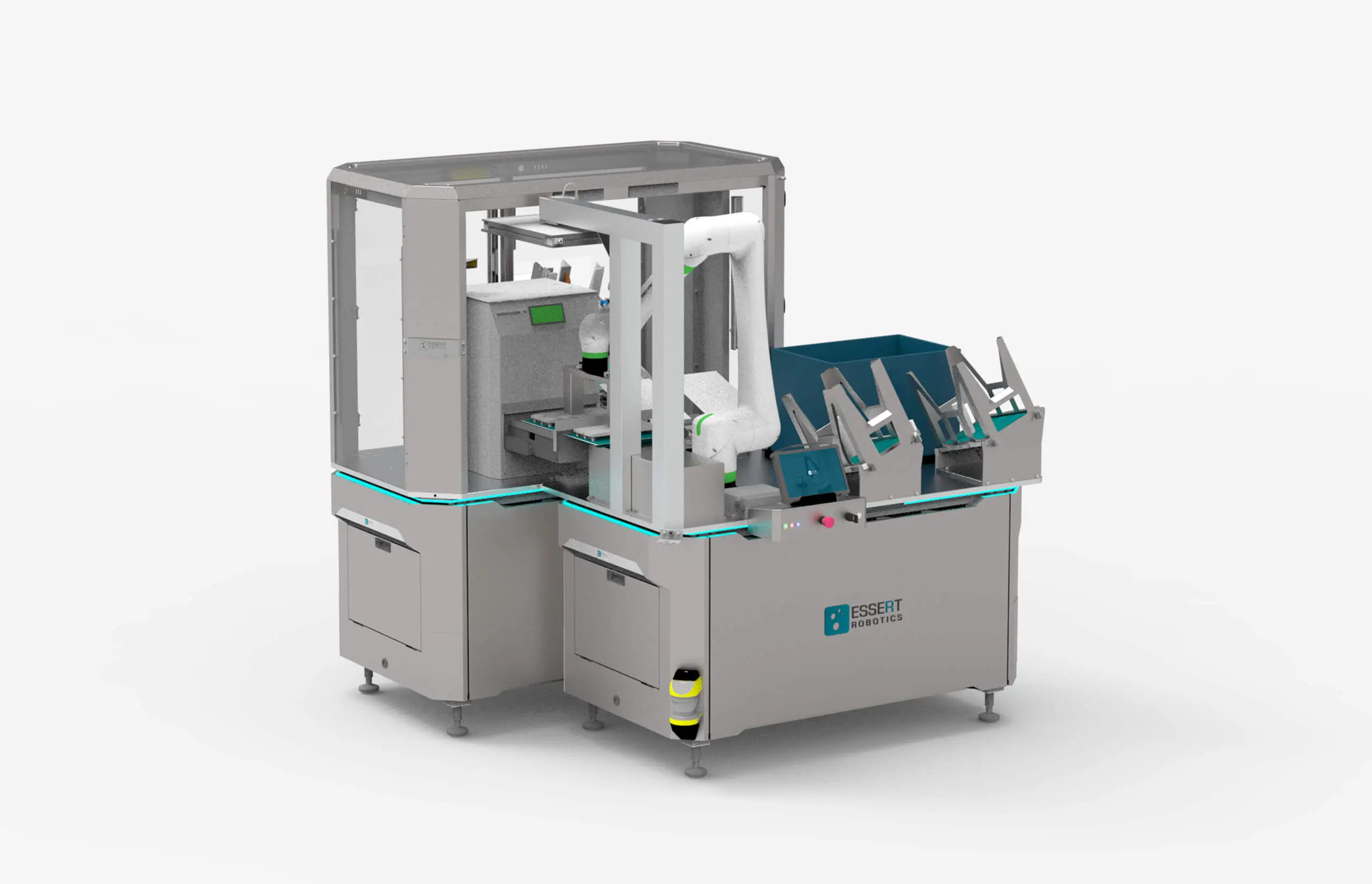
ESSERT’s approach to blister automation covers the complete process on a single modular platform.
Automated Product Equipping
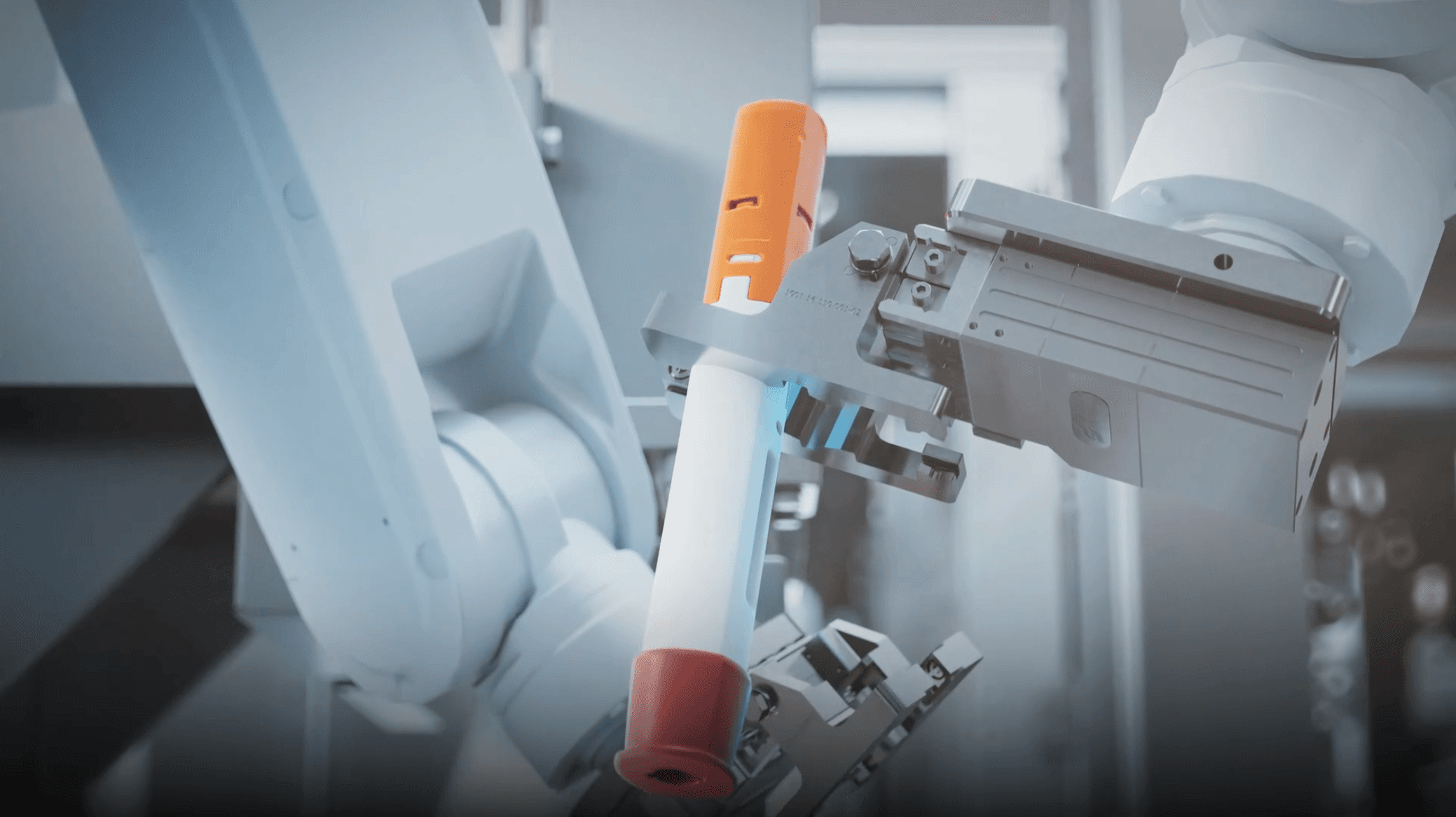
Collaborative robots place products into blister cavities with consistent positioning and orientation. Integrated vision systems verify correct placement before the blister advances to sealing. The system handles a range of product types and form factors without requiring tool changes for each new SKU.
Automated Tyvek Handling
Tyvek sheets are separated from the stack automatically and fed to the sealing machine in the correct orientation. Integrated printing verification checks every sheet before placement, ensuring label content and code readability are confirmed before the seal is made.
Sealing Without Re-Validation
This is a point that matters significantly in regulated environments. When ESSERT’s automation is added upstream of an existing validated sealing unit, the sealing machine itself is not modified. It continues to operate with its existing validated parameters. This means the IQ/OQ/PQ qualification already in place for the sealing unit stays intact, with no re-validation required.
For production and regulatory teams managing tight validation schedules and budgets, this directly changes the business case for automation.
Blister Punching and Singulation
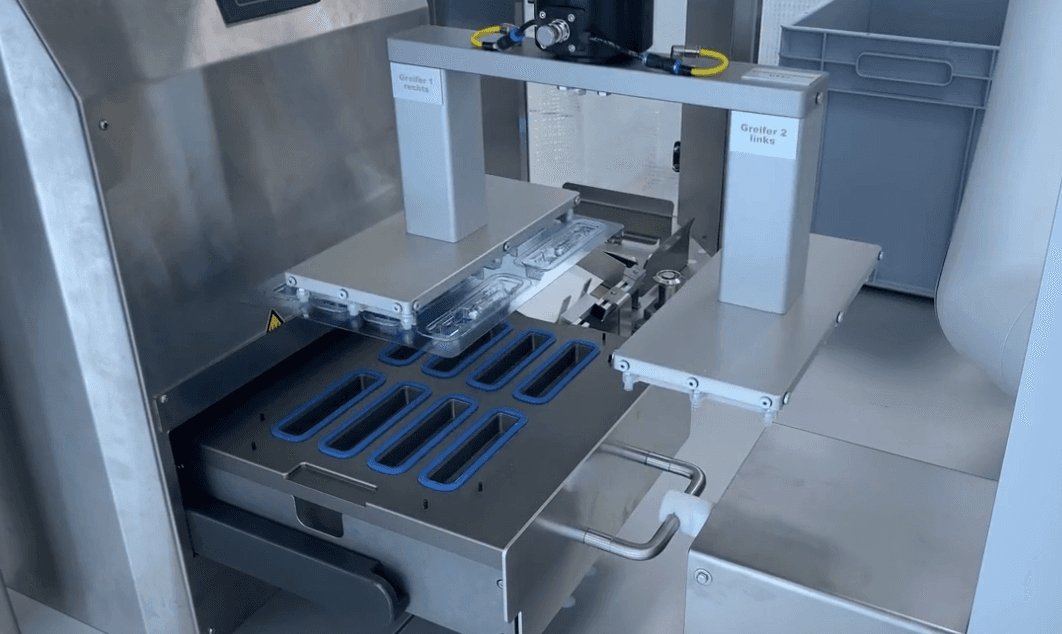
Sealed blister sheets are punched into individual units by the automation system with consistent mechanical handling, avoiding damage to the sealed edge and Tyvek surface that manual handling can introduce.
Inspection and Workstation
Transfer Singulated blisters move to an automated inspection station where camera systems check seal integrity, label presence, product position, and code readability. Where manual final inspection is required or preferred, the system transfers blisters to a human workstation in a controlled, ergonomic handoff that maintains traceability without interrupting flow.

Trusted by Industry Leaders like Ypsomed
"With ESSERT's solution, we have succeeded in automating our existing manual workstation, increasing productivity, and thus increasing the output of our products.”
Andreas Mehlich
Head of Engineering
The Compliance Advantage of End-to-End Automation
In Pharma and MedTech manufacturing, compliance is not just about passing audits. It is about having a production process that generates reliable, defensible documentation at every step.
Manual processes create documentation gaps by their nature. An operator who loads 400 blisters per shift cannot document the placement accuracy of each one. A Tyvek feeder managed by hand cannot guarantee that every sheet was verified before sealing. A manual inspection step cannot guarantee that every unit was checked against every criterion.
End-to-end automation changes this. Every step generates data. Every unit is traceable. Every seal parameter is recorded. The audit trail is a by-product of how the line runs, not an additional administrative burden.
EU GMP Annex 1: The Regulatory Case for Reducing Human Interventions
The 2022 revision of EU GMP Annex 1 “Manufacture of Sterile Medicinal Products”, which came into full effect in August 2023, has fundamentally raised the bar for sterile manufacturing environments. The revised Annex, expanded from 16 to 59 pages, introduces a mandatory, facility-wide Contamination Control Strategy (CCS) that requires manufacturers to identify, document, and justify every measure taken to minimize contamination risk across premises, equipment, personnel, and processes.
The central message for packaging lines is direct: human interventions are a primary source of contamination risk, and the expectation is to minimize them. Every manual touchpoint in a blister packaging line, whether an operator loading products into cavities, hand-feeding Tyvek, or manually handling singulated blisters, represents a contamination event that must be controlled, monitored, and documented within the CCS framework.
Automation does not just make this easier. For manufacturers operating under Annex 1, it is increasingly the expected approach to demonstrate a credible contamination control strategy to regulators. The companies that are inspection-ready under the new Annex share one common trait: they have moved away from manual interventions in critical packaging steps and replaced them with documented, validated automated processes.
For manufacturers working under ISO 11607 (sterile barrier system requirements and process validation for medical packaging), ISO 13485:2016 (the global QMS standard for medical devices, which the FDA aligned its 21 CFR Part 820 regulations with as of February 2026), and EU GMP Annex 1, end-to-end blister automation is not a minor efficiency gain. It is a fundamental shift in how compliance is maintained, demonstrated, and defended in regulatory inspections.
Market Context: Why This Is Happening Now
The global medical device packaging market was valued at approximately USD 38 billion in 2024 and is projected to reach USD 55 billion by 2030, growing at a CAGR of over 6%. This growth is fueled by rising demand for sterile, traceable packaging across a broader range of device types, including combination products, personalized therapies, and single-use surgical instruments.
At the same time, regulatory alignment is tightening. The FDA finalized the harmonization of 21 CFR Part 820 with ISO 13485:2016 in February 2024, with full effect from February 2026. This means US-based manufacturers now operate under essentially the same QMS framework as their European counterparts, and documented, validated, fully traceable packaging processes are increasingly non-negotiable on both sides of the Atlantic.
Where This Approach Works Best
End-to-end blister line automation delivers the strongest outcomes for manufacturers running high-mix, lower-volume production, where product types and blister formats change regularly. Personalized therapies, combination products, specialty pharmaceuticals, and complex MedTech devices all fit this profile.
The modular platform architecture means individual process steps can be automated incrementally if needed. A manufacturer might start with automated product equipping and Tyvek feeding, then add punching automation and inspection handoff in a subsequent phase. Because all modules run on the same platform with the same software and interfaces, integration is straightforward and qualification can be structured accordingly.
Blister Sealing solution: https://essert.com/solutions/blister-sealing/
Medical Product Packing solution: https://essert.com/solutions/packing-of-medical-products/
Next Steps
If you are evaluating automation for your blister packaging line, whether you are looking at a single step or the full process, I am happy to walk through your specific setup.
Introduction
Ask most Pharma or MedTech production managers where their biggest packaging bottleneck is, and they will point somewhere on the blister line. It might be the manual product loading step, where operators place sensitive devices into blister cavities by hand. Or the Tyvek feeding station, where sheets are separated and aligned manually before every seal. Or the punching step downstream, where singulated blisters need to be moved, inspected, and handed off without introducing damage or contamination.
The common denominator: each step has historically been treated as a standalone automation problem. A Tyvek feeder here, an inspection camera there, a robot for product loading if budget allows.
The result is a blister line that is semi-automated at best, dependent on manual handoffs between each step, and difficult to validate comprehensively.
This article makes the case for a different approach: automating the blister process end-to-end on a single integrated platform, and explains why this delivers better outcomes in quality, compliance, and total cost of ownership than piecemeal solutions.
The Complete Blister Process: Five Steps, Multiple Manual Touchpoints
Understanding where automation adds value requires looking at the full process, not just individual steps.
Step 1: Product Equipping
Medical products arrive from upstream processes, whether syringes from filling lines, surgical instruments from assembly, or combination devices from MedTech manufacturing. Each product needs to be placed precisely into its blister cavity in the correct orientation. Misplacement at this stage causes defects that only become visible after sealing, wasting both product and packaging material.
Step 2: Tyvek Handling and Feeding
Tyvek sheets must be separated from the stack individually without tearing, fed to the sealing machine in the correct orientation, and verified for correct label printing before the seal is made. Manual feeding introduces the risk of double-feeds, misalignment, and missed label verification. Any of these failures can result in a compromised or non-compliant sealed blister.
Step 3: Sealing
The sealing machine closes the sterile barrier by applying Tyvek to the formed blister under controlled temperature, pressure, and dwell time. This is typically the most heavily validated step in the process. Consistent sealing outcomes depend directly on consistent upstream handling of both the blister and the Tyvek.
Step 4: Blister Punching & Singulation
After sealing, multi-format blister sheets are punched or cut into individual blister units. This step requires precise mechanical handling to avoid damage to the sealed edge or the Tyvek surface. Products that are mishandled here can fail inspection or arrive at the end customer with compromised packaging integrity.
Step 5: Inspection and Transfer
Singulated blisters need to be inspected before final packing. This can mean automated camera-based inspection checking seal geometry, label presence and readability, and product position. Alternatively, blisters can be transferred to a manual inspection workstation where operators perform final checks. Either way, the transfer process needs to be controlled to avoid contamination and maintain traceability.
Why Manual Steps at Any Point Create System-Level Problems
The challenge with partial automation is that quality and documentation are only as strong as the weakest manual link in the chain.
A robot that loads products perfectly into blister cavities cannot compensate for misaligned Tyvek feeding two steps later. An inspection camera that catches every seal defect cannot recover product that was damaged during manual punching handoff. A validated sealing machine cannot guarantee consistent output if the operator feeding it varies their placement slightly from cycle to cycle.
End-to-end automation removes this dependency. Every step is controlled, documented, and repeatable. Traceability runs from product identity through equipping, sealing parameters, inspection results, and final pack, creating a complete data record per unit without relying on operator notes or manual logs.
What End-to-End Blister Automation Looks Like
ESSERT’s approach to blister automation covers the complete process on a single modular platform.
Automated Product Equipping
Collaborative robots place products into blister cavities with consistent positioning and orientation. Integrated vision systems verify correct placement before the blister advances to sealing. The system handles a range of product types and form factors without requiring tool changes for each new SKU.
Automated Tyvek Handling
Tyvek sheets are separated from the stack automatically and fed to the sealing machine in the correct orientation. Integrated printing verification checks every sheet before placement, ensuring label content and code readability are confirmed before the seal is made.
Sealing Without Re-Validation
This is a point that matters significantly in regulated environments. When ESSERT’s automation is added upstream of an existing validated sealing unit, the sealing machine itself is not modified. It continues to operate with its existing validated parameters. This means the IQ/OQ/PQ qualification already in place for the sealing unit stays intact, with no re-validation required.
For production and regulatory teams managing tight validation schedules and budgets, this directly changes the business case for automation.
Blister Punching and Singulation
Sealed blister sheets are punched into individual units by the automation system with consistent mechanical handling, avoiding damage to the sealed edge and Tyvek surface that manual handling can introduce.
Inspection and Workstation
Transfer Singulated blisters move to an automated inspection station where camera systems check seal integrity, label presence, product position, and code readability. Where manual final inspection is required or preferred, the system transfers blisters to a human workstation in a controlled, ergonomic handoff that maintains traceability without interrupting flow.
Trusted by Industry Leaders like Ypsomed
"With ESSERT's solution, we have succeeded in automating our existing manual workstation, increasing productivity, and thus increasing the output of our products.”
Andreas Mehlich
Head of Engineering
The Compliance Advantage of End-to-End Automation
In Pharma and MedTech manufacturing, compliance is not just about passing audits. It is about having a production process that generates reliable, defensible documentation at every step.
Manual processes create documentation gaps by their nature. An operator who loads 400 blisters per shift cannot document the placement accuracy of each one. A Tyvek feeder managed by hand cannot guarantee that every sheet was verified before sealing. A manual inspection step cannot guarantee that every unit was checked against every criterion.
End-to-end automation changes this. Every step generates data. Every unit is traceable. Every seal parameter is recorded. The audit trail is a by-product of how the line runs, not an additional administrative burden.
EU GMP Annex 1: The Regulatory Case for Reducing Human Interventions
The 2022 revision of EU GMP Annex 1 “Manufacture of Sterile Medicinal Products”, which came into full effect in August 2023, has fundamentally raised the bar for sterile manufacturing environments. The revised Annex, expanded from 16 to 59 pages, introduces a mandatory, facility-wide Contamination Control Strategy (CCS) that requires manufacturers to identify, document, and justify every measure taken to minimize contamination risk across premises, equipment, personnel, and processes.
The central message for packaging lines is direct: human interventions are a primary source of contamination risk, and the expectation is to minimize them. Every manual touchpoint in a blister packaging line, whether an operator loading products into cavities, hand-feeding Tyvek, or manually handling singulated blisters, represents a contamination event that must be controlled, monitored, and documented within the CCS framework.
Automation does not just make this easier. For manufacturers operating under Annex 1, it is increasingly the expected approach to demonstrate a credible contamination control strategy to regulators. The companies that are inspection-ready under the new Annex share one common trait: they have moved away from manual interventions in critical packaging steps and replaced them with documented, validated automated processes.
For manufacturers working under ISO 11607 (sterile barrier system requirements and process validation for medical packaging), ISO 13485:2016 (the global QMS standard for medical devices, which the FDA aligned its 21 CFR Part 820 regulations with as of February 2026), and EU GMP Annex 1, end-to-end blister automation is not a minor efficiency gain. It is a fundamental shift in how compliance is maintained, demonstrated, and defended in regulatory inspections.
Market Context: Why This Is Happening Now
The global medical device packaging market was valued at approximately USD 38 billion in 2024 and is projected to reach USD 55 billion by 2030, growing at a CAGR of over 6%. This growth is fueled by rising demand for sterile, traceable packaging across a broader range of device types, including combination products, personalized therapies, and single-use surgical instruments.
At the same time, regulatory alignment is tightening. The FDA finalized the harmonization of 21 CFR Part 820 with ISO 13485:2016 in February 2024, with full effect from February 2026. This means US-based manufacturers now operate under essentially the same QMS framework as their European counterparts, and documented, validated, fully traceable packaging processes are increasingly non-negotiable on both sides of the Atlantic.
Where This Approach Works Best
End-to-end blister line automation delivers the strongest outcomes for manufacturers running high-mix, lower-volume production, where product types and blister formats change regularly. Personalized therapies, combination products, specialty pharmaceuticals, and complex MedTech devices all fit this profile.
The modular platform architecture means individual process steps can be automated incrementally if needed. A manufacturer might start with automated product equipping and Tyvek feeding, then add punching automation and inspection handoff in a subsequent phase. Because all modules run on the same platform with the same software and interfaces, integration is straightforward and qualification can be structured accordingly.
Blister Sealing solution: https://essert.com/solutions/blister-sealing/
Medical Product Packing solution: https://essert.com/solutions/packing-of-medical-products/
Next Steps
If you are evaluating automation for your blister packaging line, whether you are looking at a single step or the full process, I am happy to walk through your specific setup.
Introduction
Ask most Pharma or MedTech production managers where their biggest packaging bottleneck is, and they will point somewhere on the blister line. It might be the manual product loading step, where operators place sensitive devices into blister cavities by hand. Or the Tyvek feeding station, where sheets are separated and aligned manually before every seal. Or the punching step downstream, where singulated blisters need to be moved, inspected, and handed off without introducing damage or contamination.
The common denominator: each step has historically been treated as a standalone automation problem. A Tyvek feeder here, an inspection camera there, a robot for product loading if budget allows.
The result is a blister line that is semi-automated at best, dependent on manual handoffs between each step, and difficult to validate comprehensively.
This article makes the case for a different approach: automating the blister process end-to-end on a single integrated platform, and explains why this delivers better outcomes in quality, compliance, and total cost of ownership than piecemeal solutions.
The Complete Blister Process: Five Steps, Multiple Manual Touchpoints
Understanding where automation adds value requires looking at the full process, not just individual steps.
Step 1: Product Equipping
Medical products arrive from upstream processes, whether syringes from filling lines, surgical instruments from assembly, or combination devices from MedTech manufacturing. Each product needs to be placed precisely into its blister cavity in the correct orientation. Misplacement at this stage causes defects that only become visible after sealing, wasting both product and packaging material.
Step 2: Tyvek Handling and Feeding
Tyvek sheets must be separated from the stack individually without tearing, fed to the sealing machine in the correct orientation, and verified for correct label printing before the seal is made. Manual feeding introduces the risk of double-feeds, misalignment, and missed label verification. Any of these failures can result in a compromised or non-compliant sealed blister.
Step 3: Sealing
The sealing machine closes the sterile barrier by applying Tyvek to the formed blister under controlled temperature, pressure, and dwell time. This is typically the most heavily validated step in the process. Consistent sealing outcomes depend directly on consistent upstream handling of both the blister and the Tyvek.
Step 4: Blister Punching & Singulation
After sealing, multi-format blister sheets are punched or cut into individual blister units. This step requires precise mechanical handling to avoid damage to the sealed edge or the Tyvek surface. Products that are mishandled here can fail inspection or arrive at the end customer with compromised packaging integrity.
Step 5: Inspection and Transfer
Singulated blisters need to be inspected before final packing. This can mean automated camera-based inspection checking seal geometry, label presence and readability, and product position. Alternatively, blisters can be transferred to a manual inspection workstation where operators perform final checks. Either way, the transfer process needs to be controlled to avoid contamination and maintain traceability.
Why Manual Steps at Any Point Create System-Level Problems
The challenge with partial automation is that quality and documentation are only as strong as the weakest manual link in the chain.
A robot that loads products perfectly into blister cavities cannot compensate for misaligned Tyvek feeding two steps later. An inspection camera that catches every seal defect cannot recover product that was damaged during manual punching handoff. A validated sealing machine cannot guarantee consistent output if the operator feeding it varies their placement slightly from cycle to cycle.
End-to-end automation removes this dependency. Every step is controlled, documented, and repeatable. Traceability runs from product identity through equipping, sealing parameters, inspection results, and final pack, creating a complete data record per unit without relying on operator notes or manual logs.
What End-to-End Blister Automation Looks Like
ESSERT’s approach to blister automation covers the complete process on a single modular platform.
Automated Product Equipping
Collaborative robots place products into blister cavities with consistent positioning and orientation. Integrated vision systems verify correct placement before the blister advances to sealing. The system handles a range of product types and form factors without requiring tool changes for each new SKU.
Automated Tyvek Handling
Tyvek sheets are separated from the stack automatically and fed to the sealing machine in the correct orientation. Integrated printing verification checks every sheet before placement, ensuring label content and code readability are confirmed before the seal is made.
Sealing Without Re-Validation
This is a point that matters significantly in regulated environments. When ESSERT’s automation is added upstream of an existing validated sealing unit, the sealing machine itself is not modified. It continues to operate with its existing validated parameters. This means the IQ/OQ/PQ qualification already in place for the sealing unit stays intact, with no re-validation required.
For production and regulatory teams managing tight validation schedules and budgets, this directly changes the business case for automation.
Blister Punching and Singulation
Sealed blister sheets are punched into individual units by the automation system with consistent mechanical handling, avoiding damage to the sealed edge and Tyvek surface that manual handling can introduce.
Inspection and Workstation
Transfer Singulated blisters move to an automated inspection station where camera systems check seal integrity, label presence, product position, and code readability. Where manual final inspection is required or preferred, the system transfers blisters to a human workstation in a controlled, ergonomic handoff that maintains traceability without interrupting flow.
Trusted by Industry Leaders like Ypsomed
"With ESSERT's solution, we have succeeded in automating our existing manual workstation, increasing productivity, and thus increasing the output of our products.”
Andreas Mehlich
Head of Engineering
The Compliance Advantage of End-to-End Automation
In Pharma and MedTech manufacturing, compliance is not just about passing audits. It is about having a production process that generates reliable, defensible documentation at every step.
Manual processes create documentation gaps by their nature. An operator who loads 400 blisters per shift cannot document the placement accuracy of each one. A Tyvek feeder managed by hand cannot guarantee that every sheet was verified before sealing. A manual inspection step cannot guarantee that every unit was checked against every criterion.
End-to-end automation changes this. Every step generates data. Every unit is traceable. Every seal parameter is recorded. The audit trail is a by-product of how the line runs, not an additional administrative burden.
EU GMP Annex 1: The Regulatory Case for Reducing Human Interventions
The 2022 revision of EU GMP Annex 1 “Manufacture of Sterile Medicinal Products”, which came into full effect in August 2023, has fundamentally raised the bar for sterile manufacturing environments. The revised Annex, expanded from 16 to 59 pages, introduces a mandatory, facility-wide Contamination Control Strategy (CCS) that requires manufacturers to identify, document, and justify every measure taken to minimize contamination risk across premises, equipment, personnel, and processes.
The central message for packaging lines is direct: human interventions are a primary source of contamination risk, and the expectation is to minimize them. Every manual touchpoint in a blister packaging line, whether an operator loading products into cavities, hand-feeding Tyvek, or manually handling singulated blisters, represents a contamination event that must be controlled, monitored, and documented within the CCS framework.
Automation does not just make this easier. For manufacturers operating under Annex 1, it is increasingly the expected approach to demonstrate a credible contamination control strategy to regulators. The companies that are inspection-ready under the new Annex share one common trait: they have moved away from manual interventions in critical packaging steps and replaced them with documented, validated automated processes.
For manufacturers working under ISO 11607 (sterile barrier system requirements and process validation for medical packaging), ISO 13485:2016 (the global QMS standard for medical devices, which the FDA aligned its 21 CFR Part 820 regulations with as of February 2026), and EU GMP Annex 1, end-to-end blister automation is not a minor efficiency gain. It is a fundamental shift in how compliance is maintained, demonstrated, and defended in regulatory inspections.
Market Context: Why This Is Happening Now
The global medical device packaging market was valued at approximately USD 38 billion in 2024 and is projected to reach USD 55 billion by 2030, growing at a CAGR of over 6%. This growth is fueled by rising demand for sterile, traceable packaging across a broader range of device types, including combination products, personalized therapies, and single-use surgical instruments.
At the same time, regulatory alignment is tightening. The FDA finalized the harmonization of 21 CFR Part 820 with ISO 13485:2016 in February 2024, with full effect from February 2026. This means US-based manufacturers now operate under essentially the same QMS framework as their European counterparts, and documented, validated, fully traceable packaging processes are increasingly non-negotiable on both sides of the Atlantic.
Where This Approach Works Best
End-to-end blister line automation delivers the strongest outcomes for manufacturers running high-mix, lower-volume production, where product types and blister formats change regularly. Personalized therapies, combination products, specialty pharmaceuticals, and complex MedTech devices all fit this profile.
The modular platform architecture means individual process steps can be automated incrementally if needed. A manufacturer might start with automated product equipping and Tyvek feeding, then add punching automation and inspection handoff in a subsequent phase. Because all modules run on the same platform with the same software and interfaces, integration is straightforward and qualification can be structured accordingly.
Blister Sealing solution: https://essert.com/solutions/blister-sealing/
Medical Product Packing solution: https://essert.com/solutions/packing-of-medical-products/
Next Steps
If you are evaluating automation for your blister packaging line, whether you are looking at a single step or the full process, I am happy to walk through your specific setup.
Let’s Talk
Automation is a long-term commitment. We partner with manufacturers who think in lifecycles. If you are evaluating automation for a new product, scaling a process, or preparing for a future pipeline - let’s talk.
Let’s Talk
Automation is a long-term commitment. We partner with manufacturers who think in lifecycles. If you are evaluating automation for a new product, scaling a process, or preparing for a future pipeline - let’s talk.
Let’s Talk
Automation is a long-term commitment. We partner with manufacturers who think in lifecycles. If you are evaluating automation for a new product, scaling a process, or preparing for a future pipeline - let’s talk.
See what's new

Humanoid Robots in Pharma Manufacturing: What Is Hype, What Is Real
Pharma manufacturers keep asking about humanoid robots. A machine builder's assessment: safety standards, GMP qualification, precision, and what would need to change.
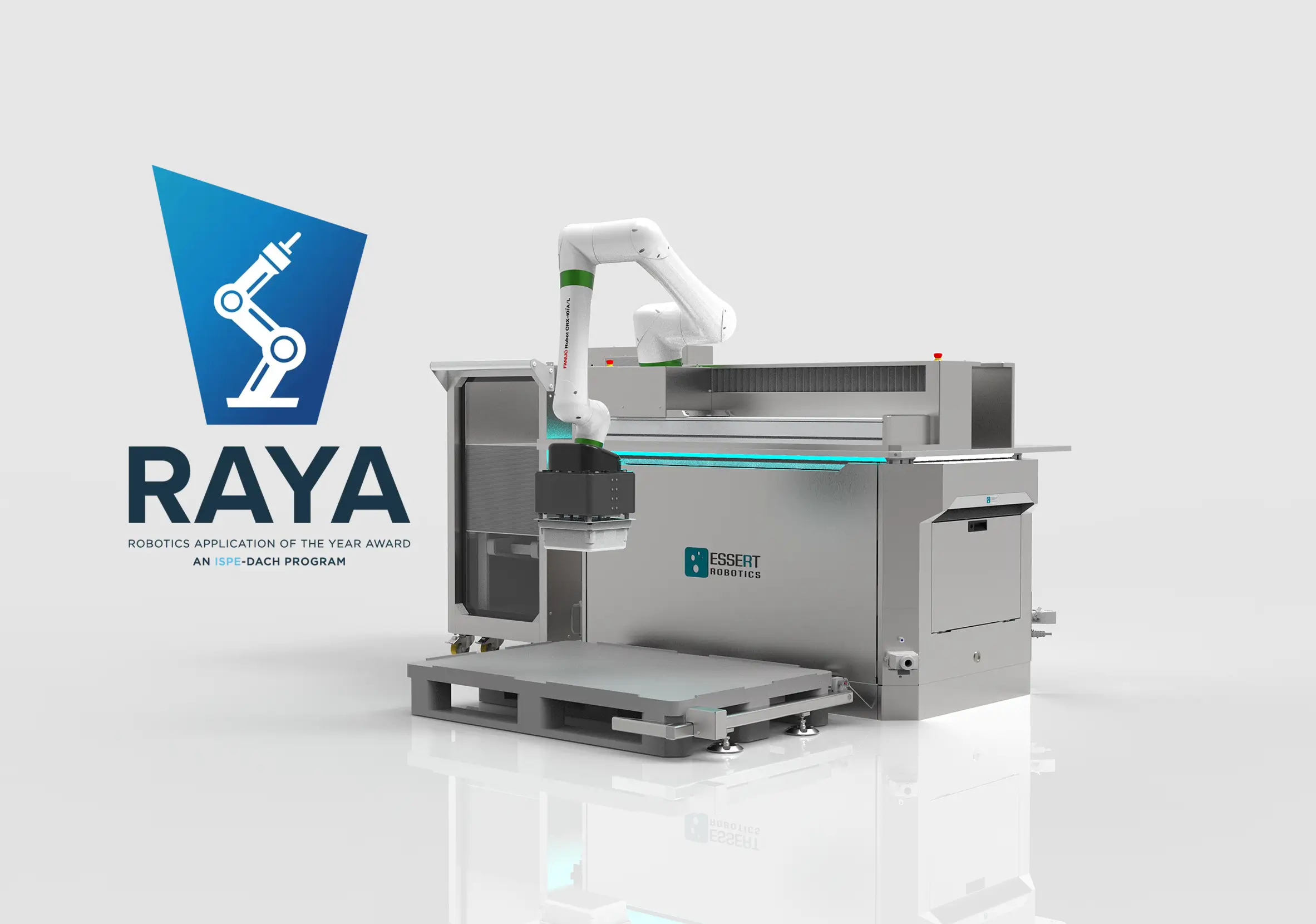
What Is Robotic Tub Handling in Pharma Fill and Finish?
What robotic tub handling is, how it works from infeed to palletizing, and why it closes the last manual gap in fill and finish.

What Is High-Mix Low-Volume (HMLV) Manufacturing in Pharma and MedTech?
Many products, small batches: what HMLV manufacturing is, why rigid lines fail under high mix, and what modular automation changes.
See what's new
Humanoid Robots in Pharma Manufacturing: What Is Hype, What Is Real
Pharma manufacturers keep asking about humanoid robots. A machine builder's assessment: safety standards, GMP qualification, precision, and what would need to change.
What Is Robotic Tub Handling in Pharma Fill and Finish?
What robotic tub handling is, how it works from infeed to palletizing, and why it closes the last manual gap in fill and finish.
What Is High-Mix Low-Volume (HMLV) Manufacturing in Pharma and MedTech?
Many products, small batches: what HMLV manufacturing is, why rigid lines fail under high mix, and what modular automation changes.
See what's new
Humanoid Robots in Pharma Manufacturing: What Is Hype, What Is Real
Pharma manufacturers keep asking about humanoid robots. A machine builder's assessment: safety standards, GMP qualification, precision, and what would need to change.
What Is Robotic Tub Handling in Pharma Fill and Finish?
What robotic tub handling is, how it works from infeed to palletizing, and why it closes the last manual gap in fill and finish.
What Is High-Mix Low-Volume (HMLV) Manufacturing in Pharma and MedTech?
Many products, small batches: what HMLV manufacturing is, why rigid lines fail under high mix, and what modular automation changes.
Contact our team
From initial questions to your custom MicroFactory solutions – our team is here to assist you.
Contact our team
From initial questions to your custom MicroFactory solutions – our team is here to assist you.
Contact our team
From initial questions to your custom MicroFactory solutions – our team is here to assist you.
